Elon Musk has caused a political stir by amplifying the criticism regarding tackling the sexual exploitation of vulnerable teenagers by Asian grooming gangs. Musk claimed that in 2008 the Home Office advised Police forces not to intervene in child grooming cases because victims “had made an informed choice about sexual behaviour.”
Musk also alleged that “Gordon Brown sold those little girls for votes.”
Despite the publication of the ‘Jay Report’ in October 2022, none of the 20 recommendations for protecting children have been implemented by the British Government.
Setting aside what business it is for an American entrepreneur to be commenting on the inactions of successive UK governments, the subject of abusing women and children is of the upmost importance.
Influencers and Superstars
‘The look’ is an absolute must of fashion designers and social influencers. The frequently doctored photographs of superstars maintain the unrealistic social and cultural ideals for women to attain. Exposed to the constant stream of stunning images, girls are obsessed with striving to gain the perfect Body Image. The rise among young women of anorexia, other eating disorders, and the complications resulting from plastic surgery are some of the many negative effects of increased usage of social media. Despite the constant warnings from psychologists, sociologists, and health professionals the trend is not reversing. Is this not the abuse of young girls’ minds?
Relationship and Sex Education (RSE)
In schools, infants are exposed to illustrations of male and female genitalia and encouraged to talk about them as normally as doing their sums. Infants are ‘taught’ how to be intimate. Infants are ‘taught’ about different types of acceptable sexual relationships. Is this not the abuse of young girls’ innocence?
Career Path
Young girls are influenced to a path in life ‘to have it all.’ They have been told they can aspire to simultaneously having a career, holidays abroad, subscriptions to health and fitness, and becoming mothers to perfectly beautiful children. Only for the career to take precedence over permanently settling down. Only for the career to delay when they can have children. Then realising that raising children occupies too much time to further advance that career.
Many women are dissatisfied with their lives. Becoming overwhelmed with pressure, or becoming stressed from undertaking too many conflicted priorities, or experiencing a deterioration of mental health, or becoming dependant on alcohol. Is this not the abuse of young women’s futures?
Only Fans
The cost-of-living crisis has placed enormous financial pressure on single women and university students. The worry of paying energy bills and ever-increasing rents has seen an upsurge of young women using Only Fans – the internet service allowing them to upload intimate photos and videos of themselves in exchange for money. Is this not the abuse of women’s honour?
Body Count
Popular culture, entertainment and peer pressure has encouraged promiscuity amongst teenagers for decades. Consequently, many women have only experienced multiple short-term relationships. Struggling to maintain successful long-term relationships frequently impacts on women’s self-esteem. Is this not the abuse of women’s self-worth?
Social Media
In the modern world, social media is the means for the health and beauty industry to maximise their profits. It is also the platform for influencers and so-called lifestyle advisors. Accordingly, how many millions is Elon Musk making from the abuse of women and girls?
It is not the case that there are always two Eids. In 2022 mosques across the UK held Eid ul-Fitr on the same day.
The typical annual trend is that only one of the two sightings over Ramadan are disputed, not both. This means when all mosques start fasting on the same day, they usually end up differing over Eid-ul Fitr. When Muslims begin fasting on different days, usually Eid announcements subsequently turn out to be for the same day.
You may recall having discussions with friends on Eid whether they fasted 29 or 30 days. In other words, you finished Ramadan on the same day, but started it a day apart.
Same day Eids are special. Although, I do enjoy the complete absence of tension whenever Eid ul-Fitr is on the same day, it is a mistake to think that the differences over the moon sighting were set aside or that the imams had arrived at consensus, for that year.
Instead, what was experienced was when those taking a separate stance concluded their announcements for the same day. In other words, the announcements are down to coincidence rather than consensus or compromise.
Here are some UK examples to illustrate the point:
2015
Different Start
Same Eid
2018
Same Start
Different Eid
2019
Different Start
Different Eid
2020
Same Start
Different Eid
2021
Different Start
Same Eid
2022
Different Start
Same Eid
2023
Same Start
Different Eid
I am predicting for this year that Muslims will begin Ramadan on different days.
The first day of fasting will begin either on Monday 11th March or Tuesday 12th March 2024.
Eid will not be disputed and will be announced for Wednesday 10th April 2024 .
The events about to unfold are down to the will of Allah. Whether my prediction is right or wrong, this is entirely by the will of Allah.
The Prophet (SAW) said: “Shall I not inform you of something more excellent in degree than fasting, prayer and charity?” The people replied: “Yes, Prophet of Allah.” He (SAW) said: “It is putting things right between people; spoiling them is destructive (the shaver)”.
Abu Dawud
My post from 2022 not only explains why Muslims have disagreements over the sighting of the moon, it also proposes the solution, and the approach Muslims can take to avoid alienating each other.
It is against Islam to target civilians. It is against Islam to desecrate a place of worship. It is no surprise that a state is shocked with grief. It goes without saying that using firearms in a synagogue on the holiest day of the week has no Islamic justification.
It is Friday 26th January 2023. It began as a normal, peaceful evening but ended in tragedy for the Mizrahi family. At about 8pm, a lone Palestinian gunman opened fire on people outside a synagogue, killing seven and wounding nine.
Eli and Natali Mizrahi, a newly married couple from the Neve Yaakov settlement, in occupied East Jerusalem, were eating with their family when they heard gunshots and screaming on the street.
They both rushed outside to help, then paid with their lives.
Shimon Israel, father of Eli Mizrahi, told reporters “We were in the middle of our meal, and there were several shots and my son jumped up. It seems he was speaking with the terrorist, who pulled out a gun. [Eli] and his wife were murdered. [The terrorist] was standing by his car and he shot them, then got into the car and fled.”1
The attack in Jerusalem sent shockwaves around the world. However, for once, the news coverage pointed out that this incident did not come unprovoked. It came the day after nine Palestinians were killed in Jenin.
Jenin
It is written in the Qu’ran that ‘Oppression is worse than death’ (Surah Al-Baqarah 2:217)
The prophet Muhammed (SAW) said “Whomsoever harms a Muslim unjustly, it is as if he has destroyed the Ka’bah.” (Tabarani)
It is no surprise that a state is shocked with grief.
Daybreak on Thursday 25th January, and units of IDF soldiers arrived at several entrances of the Jenin refugee camp. Witnessing the event was Sakir Khader, a Palestinian-Dutch film maker.
He noticed that as an armoured vehicle, disguised as a commercial van, approached the camp, a single shot was fired at it. The IDF immediately returned fire and a fierce four-hour gun battle then ensued.
Khader said “I was stuck in the middle of the firefight for hours. It was crazy. There were snipers and drones, and they used a bulldozer to block off a street. It destroyed lots of cars and a public meeting spot2.
“At the hospital there are mothers looking for their sons … Everything is still very tense. I have been coming to Palestine all my life and I have never seen something like this.”
Several of the camp’s residents said the violence was the worst they had witnessed since the Second Intifada. The death toll from the military raid is the highest ever recorded by the United Nations since records began in 20053.
Amongst the Palestinians killed was a sixty-one-year-old woman. Twenty more Palestinian refugees were seriously injured. Two more were killed in clashes in Ramallah and East Jerusalem later the same day.
By the afternoon, whilst the residents of Jenin were burying their dead, protests began all across the West Bank. At a demonstration by the Beit El checkpoint near Ramallah, the 22-year-old student, Nour said:
“It is the same story again and again. The occupation does not stop killing us, so we will not stop resisting.”3
The Occupation Does Not Stop Killing
Three days of escalating carnage have not come out of nowhere. Tensions have risen since last spring, when a surge in Palestinian knife and gun attacks led to the Zionist State4 launching the huge military campaign called ‘Operation Breakwater’.
Breakwater, which is mainly targeting Palestinian factions in Jenin and Nablus, contributed to the highest death toll across Palestine since the Second Intifada ended in 2005, with about 150 Palestinians killed in 2022. Another 32 Palestinians, fighters and civilians, have been killed so far this year.
Despite the appearance that the Zionists are reacting to provocation from the Palestinians, Operation Breakwater should be understood in its wider context.
The Oslo Peace Accords
Stood in the grounds of the White House, President Bill Clinton was smiling during what was arguably, the greatest moment of his political career. The Declaration of Principles on Interim Self-Government Arrangements was signed by Prime Minister Yitzhak Rabin and Yasser Arafat, leader of the Palestine Liberation Organization (PLO), on 13th September 1993. The famous picture taken that day captured the historical handshake of peace. After forty-six years of misery, Palestinians and Zionists were both committing themselves to what became known as the Oslo Accords5 that aimed to bring an end to all hostilities.
What seemed impossible, stunned the world. In 1994, the Nobel Peace Prize was awarded jointly to Yasser Arafat, Shimon Peres and Yitzhak Rabin “for their efforts to create peace in the Middle East“.6
One of the millions of people overjoyed was long time peace campaigner Mattityahu Peled. Publicly he praised Rabin, declaring that he had “crossed the Rubicon.” Full of anticipation he decided to scrutinize the details of the Oslo Accords. He would be one of the few people in the world that actually read it all!
Peled was a dedicated Zionist, undertaking a crucial role within the IDF during the Six-Day War. When the Major General retired in 1969, he became a leading peace activist and the first proponent of dialogue with the PLO, insisting on the full withdrawal (soldiers and civilians) from the Occupied Territories.
A year later he published his findings in an article entitled ‘Rabin does not want peace’. The publication coincided as Rabin was receiving his Nobel Peace Prize, in 1994. Peled pointed out that far from being a document that was designed to bring peace to the Middle East, it was a plan intended to strengthen the Zionist’s grip over the whole of Palestine. The Government had treated Arafat and the Palestinians with contempt. The Government had already disregarded all their agreed commitments. And it was clear the Government would continue that precedent.
Despite the rhetoric, the Oslo Accords were not going to lead to peace.
His last essay entitled “Requiem to Oslo“, was written a few weeks before his death7. It was published in the newsletter The Other Israel8, in 1995. Peled repeated his disappointment with the Oslo Accords and predicted it would only lead to an explosion of violence. The Second Intifada broke out in the year 2000.
Understanding the Oslo Accords
The declared main objectives of the Oslo Accords were “to broaden Palestinian self-government in the West Bank by means of an elected self-governing authority [to] allow the Palestinians to conduct their own internal affairs, reduce points of friction between Israelis and Palestinians, and open a new era of cooperation and coexistence based on common interest, dignity, and mutual respect. At the same time, it protects Israel’s vital interests, and in particular its security interests, both with regard to external security as well as the personal security of its citizens in the West Bank.″
The Accords also meant that the PLO recognised the Zionist State; the Zionist State recognised the PLO as the representative of the Palestinian people; and both sides agreed to resolve their issues through diplomacy.
Under the agreement, control of the West Bank would be co-ordinated between each side. The PLO would reorganise and establish a Palestinian Authority to manage public affairs. Thereafter, administration of the West Bank would fall under three categories.
Area A would be completely controlled by the Palestinian Authority. This included both political and security matters, including policing. Area A contained the major cities of Ramallah, Bethlehem, Nablus, Jenin, Tulkarem, Qalqilya, Jericho and the majority of Hebron. No illegal settlements would be permitted within Area A, apart from Hebron.
Area B would be politically controlled by the Palestinian Authority, with the Zionist State maintaining complete military control over this area, with limited cooperation from Palestinian Police. This area covered most of the Palestinian agricultural land and included approximately 440 Palestinian villages.
Area C would be politically and militarily controlled by the Zionist State.
Most of the West Bank’s natural resources are found within Area C. Despite that, more than 70% of Palestinian villages in this area remain unconnected to the water grid. Meanwhile, all the illegal settlements are supplied with every amenity.
In 1972, there were around 1,000 Zionist settlers living in Area C. By 2017 the settler population increased to at least 360,000 people living in 125 settlements. Settlers receive lower tax rates and generous grants from the Zionist Government; a deliberate policy to encourage even more settlers to move there. Especially into the old city of Hebron. That part of the city falls within Area C.
Area A 18% of the West Bank
Area B 22% of the West Bank
Area C 60% of the West Bank
These details begin to explain Peled’s conclusions. And yet, Arafat still signed the agreement!
The Collapse of Oslo
Yigal Amir, an ultranationalist, radically opposed Prime Minister Yitzhak Rabin’s peace initiative, particularly the signing of the Oslo Accords.
Amir attended the Peace Rally organised for 4th November 1995. He heard Rabin address the crowd of 100,000 attendees with a message to overcome their fears, let go of the past, and forge an accord with their Palestinian neighbours.
Late in the evening Rabin left the rally and walked towards his waiting limousine. Out of the shadows stepped Amir and calmly shot the prime minister twice in quick succession. Within half an hour Rabin was pronounced dead.
Months later the Government collapsed and predictably the Oslo peace initiative dissolved. The Zionists claimed Palestinian violence was responsible for its failure, while the Palestinians blamed the expansion of illegal settlements and repressive military presence in the West Bank.
However, if the peace agreement was sabotaged by the Palestinians, why have the Zionists held on to the main elements of the Oslo Accords? Namely, continuing to recognise the Palestinian Authority and the administration of Areas A, B and C?
Clearly because it continued to suit the other agenda.
Current Israeli Prime Minister Benjamin Netanyahu made his objections to the Oslo Accords clear. In 2001, following his first term as prime minister (1996-1999), he claimed on a leaked video “I de facto put an end to the Oslo Accords.” This did not stop him from continuing to attend meetings intended to secure an independent Palestinian state. He dragged out the negotiations, to allow for the policy to increase illegal settlement building across the West Bank and East Jerusalem.
In this manner the Zionist can always claim that their initiatives for peace are always cast aside by the violent Palestinian responses.
The reality is, that there is as much rhetoric for peace as there is as much rhetoric for the collapse of peace. As Peled (and many other Jewish writers) pointed out, it was never about peace, it has always been about the Zionist State consolidating its hold on Palestinian territory.
Land for Peace
The refugee camp in Jenin is under the jurisdiction of the United Nations. Area A includes the city of Jenin; therefore, the refugee camp is under the protection of the UN, within the area under the complete control of the Palestinian Authority.
Therefore, the recent events should be yet another acknowledgement that the Zionist State never shows any consideration to either international protocols, or even principles of their own making, whenever pursuing their own interests.
Since 2002, armed security forces have conducted regular raids, often at night, into Area A.
Having given away 82% of the land in exchange for peace, the Palestinians are now left with nothing to negotiate with. In exchange of 82% of the territory the Palestinians have received further restrictions to their movement (permits and check points), the building of the Security Wall, 29 years of the expansion of illegal settlements, 29 years of Palestinian homes being demolished, 29 years of seeing children being arrested and prosecuted, and then after all that, still have not gained any rights acknowledging their existence9.
Status Quo
Throughout 1947, David Ben-Gurion, repeated the mantra “80% of the territory, and 80% of the population” whenever giving an address at Zionist public meetings.
Although the Zionist welcomed the British and the United Nations commitment with the establishment of a separate Jewish state in Palestine, they had a problem over the details of what the UN were proposing.
The United Nations Partition Plan for Palestine was seeking to ensure that the Zionists and Arabs would live in an environment of co-existence. This would be achieved by the majority of the areas within the Jewish state retaining an Arab population of 49%. Even the most favourable allocation only allowed for a concentration of Jews at 60%. And this was inside a land mass that was set at 56% of Palestine.
This was unacceptable for the future Prime Minister Ben-Gurion.
So, with the means of military might by the end of 1948, well over 700,000 Palestinians had become refugees after 7 of the major cities (for example Tiberius and Haifa) were emptied of their population and 530 villages were destroyed. By the end of 1948 the Zionist had expanded the territory to include 80% of Palestine and within that territory only 20% of the population were of Palestinian origin.
The current situation is part and parcel of that same policy. Which is to maintain that 80-20% ratio. The word ‘Peace’ is always used in that context by the Zionists.
Through peace negotiations the Zionists secured territory from the West Bank in 1949 from Transjordan.
Whatever moral justification can be utilised to maintain the harsh status quo against Palestinians, the Zionists will use it. Security measures, traffic controls, travel permits, rights of ownership, planning regulations, Emergency Laws, and of course, military reprisals.
Sadly, occupation brought grief to those attending the local synagogue and a family simply having an evening meal together.
4 Amongst its many meanings, the word Israel signifies the close bond between mortals and The Divine. Therefore, linguistically to criticise Israel is indeed anti-Semitic. The phrase ‘the Government of Israel’ however is an oxymoron because there is absolutely nothing divine in the policies and actions of the government. To avoid desecrating the beautiful name of Israel, I will refer to the Government and its supporters as either ‘the Zionist State’, ‘the Knesset’ or ‘the Zionists’.
5The Oslo Accords was a pair of agreements between the Zionist State and the PLO: the Oslo I Accord, signed in Washington, D.C., in 1993; and the Oslo II Accord, signed in Taba, Egypt, in 1995.
7 The obituary written in the Independent for Mattityahu is very good. As well as providing the URL address, a copy can also be found below. He was known as Matti Peled.
8The Other Israel is a publication by The Israeli Council for Israeli-Palestinian Peace (ICIPP).
9 Palestinians living in the West Bank are not recognised with any status to citizenship or nationality. Meanwhile all Jews living in the West Bank are not only citizens of the State, but they also have the right to vote.
Obituary: General Matti Peled by Joseph Finklestone, Thursday 16 March 1995
Matti Peled was not the first Israeli public figure to seek peace with the Arabs, in particular the Palestinians, but he was the first army general with a fine combat record to devote his life to the vision of peace and to be ready to be the object of virulent attacks for doing so.
Peled’s critics could not deny his achievements on the field of battle, and so persisted in denigrating him as an oddity. Yet informed Israelis never ceased to admire his courage and to appreciate his analytical mind. He was a welcome contributor not only to the liberal Haaretz newspaper but to Maariv, the mass-circulation hard-line nationalistic evening tabloid. President Ezer Weizmann, who himself went through a painful transformation from a hawk into a dove, described Peled as “one of the most outstanding and interesting figures of the 1948 generation. He was intelligent, wise and a good friend. Matti knew how to pound on the table when it was time to go to war, like the eve of the Six-Day War, and he strongly voiced the need to make peace when he thought it was possible.” Peled should be remembered, Weizmann stress-ed, as a fighter, academician, and peacemaker.
Peled’s attitude followed Winston Churchill’s dictum: staunch in war, magnanimous in peace. But even his closest admirers – and many remained silent – were surprised at his persistent call to make peace with the PLO when it was still involved in terrorist acts. His political enemies in the right-wing Likud, led by Menachem Begin and later Yitzak Shamir, saw him as a traitor whom they would have been glad to put on trial had they obtained sufficient evidence against him. He held meetings with PLO figures at a time when it was still illegal to do so.
Peled’s career in the Israeli army began with the establishment of the Israeli state in 1948 when he fought on the Jerusalem front. Ten years earlier he had been accepted into the Palmach, the elite group of the Haganah defence organisation. He displayed initiative and logical thinking similar to that which marked his contemporary Yitzak Rabin. This was particularly vital when Peled commanded relief convoys to besieged Israeli settlements. Sent to the south to face the advancing Egyptians in the Negev desert, he was twice wounded when his company was surrounded.
Acknowledged as a highly promising officer, Peled was later sent on a staff officers’ course in England and was among the founders of the Israeli Defence Forces Staff and Command College which was to play a vital role in the development of the powerful army and air force.
So conspicuous was Peled’s contribution to the Sinai campaign of 1956, led by Moshe Dayan, that he was appointed military governor of the captured Gaza Strip. In 1964 he was promoted major-general and put in charge of the Logistics Branch which brought about significant changes in the forces.
With the threat of an Egyptian invasion of Israel in June 1967, Peled was insistent on an immediate pre-emptive strike, as the Egyptians had broken their agreements and Israel could not for long retain mobilisation. The resulting devastating Israeli victory, leading to the capture of east Jerusalem, the West Bank and the Golan Heights, vindicated Peled’s military judgement. But he felt that the victory gave Israel, for the first time, a chance to make peace with the Arabs by offering them land for peace. At first the Israeli government of Levi Eshkol took a similar view, apparently offering large-scale withdrawals; but when Arab leaders remained negative the offer died.
Peled felt that Israel must take the peace offensive even if the Arabs appeared reluctant to respond. He had first been struck by the intensity of Arab nationalist feelings when he served as governor of Gaza. He became convinced that the only way forward was not by dominating the Palestinians but by living alongside them.
Leaving the Israeli army in 1969, embittered by the failure of his peace advocacy, Peled began a unique academic and political career. Fascinated by Arab language and literature, he obtained a PhD at the University of California Los Angeles. He was given a senior post at Tel Aviv University and lectured there until 1990, an example of an Israeli institution taking a liberal attitude to a rebel opposed to the main Knesset parties.
Passionately entering politics, Peled became a close friend of Issam Sartawi, one of the many PLO officials he met despite legal objections. Sartawi was to pay with his life for his advocacy of peace with Israel. Refusing to be intimidated, Peled helped to establish the Israel Council for Israeli-Palestinian Peace. Peled was also involved with two small left-wing Israeli parties, Ya’ad and Sheli, but for him the most significant move was the formation on the eve of the 1984 general election of the Progressive List for Peace which won two seats in the Knesset. Peled served as a member until the 1988 elections, always eloquent and frequently the target of abuse.
Even when weakened by cancer, Peled continued to wage his campaign for peace. He formed the Gush Shalom organisation and tried to mitigate the plight of soldiers jailed for refusing to serve on the West Bank.
At first Peled strongly supported Rabin’s peace deal with the PLO chairman Yasser Arafat in Oslo, in 1993, but Peled became critical of Rabin, accusing him of not doing enough to make a real peace with the Palestinians. Yet Peled could now feel that his concept of peace with the Arabs, which had for so many years made him an outsider, had been accepted by a large section of the Israeli people and that he could justly join the late President Anwar Sadat as one of the prophets of Arab-Israeli understanding.
Matityahu Peled, soldier; born Haifa 20 July 1923; married (two sons, two daughters); died Jerusalem 10 March 1995.
The word ‘entrapment’ has so far been absent from all the reports on Shamima Begum. The headlines and commentaries over the last seven years have malignantly described her as the Jihadi bride, remorseless, a threat to national security, and evil. Those few advocating humane empathy pointed out she was groomed, vulnerable, and a minor. However, these attempts of mitigation were largely brushed aside by the conviction that ‘she clearly knew what she was doing!’ Comprehensively, compassion was given over to outright condemnation.
Bethnal Green
The tragic chronical began on 17th February 2015. When three friends abandoned their homes in Bethnal Green to pursue the new life that was promised by ISIS. Heading for the Middle Eastern lands that were under their autonomy. Kadiza Sultana, Shamima Begum, and Amira Abase boarded a flight from Gatwick airport1. The travel arrangements had been made by a man called Mohammed al-Rashed. The teenagers met with al-Rashed at Istanbul bus station, who then smuggled them into Syria.
What the teenagers were clearly oblivious to, was that Mohammed al-Rashed worked for the Canadian Security Intelligence Service (CSIS).
Canada had recruited the ISIS trafficker as an intelligence agent back in 2013, when he applied for asylum at the Canadian embassy in Jordan. Concerned about young Canadians being urged to join ISIS the authorities took the opportunity to recruit al-Rashed.2
These details of Canadian Intelligence’s involvement are outlined in the latest book by film maker and journalist, Richard Kerbaj. The Secret History of the Five Eyes uncovers the international network that continues to share intelligence between America, Canada, Britain, Australia, and New Zealand.
Apparently, al-Rashed helped organise the travel of dozens of men and women into Syria from the UK. The double agent photographed their passports on the pretext that he needed proof of identity to buy domestic transport tickets and then forwarded the images to his CSIS handler at the Jordan embassy.3
As the Metropolitan Police launched a huge international search for the schoolgirls from Bethnal Green, Canada failed to immediately inform the UK of its role in the affair. Despite knowing what had happened within 24 hours of the international alert, CSIS remained quiet until the following month. They only eventually admitted their involvement after fearing being exposed, and then asked the British to cover up their role.4
Profound Implications
It was two years ago that a friend5 of mine mentioned that Begum was smuggled into Syria by Canadian Intelligence. Since then, I have waited for these details to become widely known in the public domain before committing my thoughts to writing. The information regarding CSIS has profound implications, so it was obvious that it was only a matter of time before it made the headlines.6
But even before becoming aware of the involvement of Canadian Intelligence and the subsequent cover up by the authorities, the injustice Shamima Begum has been repeatedly subjected to is plainly apparent. And the series of injustices were there to be scrutinised from the very beginning.
Urgency
On 20th February 2015 the Metropolitan Police issued an international alert for any information from anybody regarding the whereabouts of Sultana, Begum, and Abase. The Police circulated the infamous images of the three teenagers passing through security at Gatwick airport. And the story was reported with great concern across the globe.
Time is essential when trying to trace missing people. The wide reporting at this early stage of the investigation was essential. There would have been a heightened level of concern when discovering that they had travelled to Turkey.
It was at this point that journalists must have considered the sort of questions that would immediately come to mind. How did they do it, and unnoticed too? Are they well-travelled? They don’t speak Turkish, so how did they hope to make it through that country? How did they know what to do, where to go? Was it realistic that these teenagers planned it amongst themselves? If they got help, from whom, from where and how?
The families were completely bewildered. This was completely out of character and there had been no signs that something was amiss. And the families were not able to explain how each of them had managed to finance the tickets, which were over £1,000 each. Where had the money come from?
Had these lines of enquiry been pursued by the media then maybe the narrowly reported arrest of al-Rashed by Turkish Police7 would have been noticed. If not certainly, other leads and information would have been uncovered in the UK, had they only pursued the obvious lines of enquiry. It just required the time and opportunity for journalists to do their job.
Instead, they began exploring the teenagers’ Muslim background and speculated what led them onto the road to radicalisation. It had not taken long for the shadow of demonisation to distract from the importance over the search for the missing teenagers. After the initial shock and concern over what had happened, the tabloid press soon began its flood of “Jihadi brides” coverage.
The media quickly abandoned the path of caring in favour of pursuing the path of sensationalism.
Anthony Loyd
Four years later, the Islamic State was coming to an end. Raqqa and Mosul had been liberated and the final stronghold around the town of Baghouz, in Eastern Syria, was under siege. Europeans fleeing from airstrikes and hunger were interned into refugee camps, mostly located in Northern Syria. It was mainly women and children that escaped, as predominately the men remained behind to die for their lost cause.
The Times journalist, Anthony Loyd, was searching the al-Hawl refugee camp8 looking for any UK citizens that he was hoping would agree to speak to him.
Word had spread around the camp, and he was approached by a young lady that announced, “I’m a Bethnal Green girl”.
Loyd immediately realised that he had stumbled across one of the three missing girls from the East London borough. Within his grasp was the sensational scoop that every journalist dreams of. His credibility would become astronomical and Shamima Begum’s anonymity would disappear forever.
Loyd maintains that he conducted himself professionally. He pointed out to Shamima that she did not have to speak to him and neither did she have to answer any questions she was not comfortable with.
He began by asking her what had happened to her after she arrived in Turkey. He later asked her about living under the Islamic State. “What was that like? Was that an experience which fulfilled your aspirations?”
“Yeah, it actually really did. It was like a normal life, like the life that they show in the propaganda videos, you know. It’s a normal life but every now and then there are bombs and stuff.”
“Did you ever see executions?”
“No never. But I saw beheaded heads in the bins”
“In the bins?”
“Yeah, in the bins”
“What was that like when you first saw that? These are the heads of carcasses?”
“Yeah, it didn’t faze me at all”
Later in the interview Loyd points out that she was not fazed by the severed head but that she was angry about the oppression ISIS had imposed. “Do you think this is the end of the Caliphate?”
“There is so much oppression and corruption going on that I really don’t think that they deserve victory.” Shamima replied8.
Upon hearing about how ‘normal’ life was living in Raqqa, Loyd immediately asked if she had witnessed any public executions. Was that an attempt to clarify the aspects of normal day-to-day living within the Islamic State? Was he demonstrating impartial professional journalism or was that a question reflecting the current political climate? What did he think she meant as normal?
Ignoring the context and lack of clarification over the circumstances, the media in England became preoccupied with determining how a young woman could be unfazed when she noticed a severed head discarded in a bin. Somehow her criticism of the ‘oppression and corruption’ of ISIS was never fully explored.
Shamina probed Loyd during their discussion. “Can I just ask you what you think my fate is going to be? Because my situation is different, I left when I was young. Do you remember when I left, and I was like all over the news? My family, they somehow went to Parliament or something and Parliament said if I ever came back, I won’t be charged with terrorism or something like that. Does that rule still apply or have rules changed?”
Loyd replied, “The rules have not officially changed. You would be subject of course to an investigation to see if you had been responsible or participated in a terrorist act.”
She made it clear that she was happy to return to the UK and face any subsequent police investigation. However, she was concerned that may result in her child being taken into care by Social Services. Loyd conceded he did not know what would happen to her child.
Loyd finally became aware of what her motivation was in wanting to speak with him. Protecting her unborn child.
The BBC Interview
The BBC, amongst many broadcasters, covered the story based on Loyd’s article and recordings that were uploaded to the internet. The reaction back in Britain was nothing short of hatred.
Since the Bethnal Green girls had been away, there had been the mass shootings at the Batalan in Paris, the single deadliest terrorist attack in French history; the lone gunman at the tourist resort at Port El Kantaoui in Tunisia that took the lives of thirty Britons; and the Würzburg train attack where Riaz Khan Ahmadzai, a 17-year-old refugee from Afghanistan, stabbed and injured five people.
Twelve people were killed, and fifty-six others injured in December 2016 when a truck was deliberately driven into the crowds at the Christmas market at Breitscheidplatz, in Berlin. And of course, there had been the bombing at Manchester Arena.
Some of these incidents, and many more across Europe were linked to ISIS. Either by ISIS claiming direct responsibility for them or the offenders declaring their support for ISIS.
On 31st December 2018 at Manchester Victoria station, Mahdi Mohamud10 stabbed three people in a knife attack. Mohamud shouted “Allahu Akbar!” and “Long live the Caliphate!” This took place shortly before Shamina Begum spoke to Loyd.
For obvious reasons the camp officials did not permit internet access. Shamima was cut off from the rest of the world. Her latest situation had followed a life of isolated existence for a few years. Her knowledge about what had happened across Europe would have been limited. Without a doubt, she would not have been sufficiently exposed to the media coverage and political mood across the UK. And more importantly, she had no idea over the reaction of Loyd’s article that was printed in The Times.
Bearing in mind that meeting Anthony Loyd in 2019, was the very first contact she had with somebody from the West,
She conceded that she knew little about what had happened in the UK over the last four years
She was willing to speak to the press because she heard that Parliament had no intention of pressing charges against her
She was willing to speak to the press because she thought that would allow her to return to the UK and give her unborn child the best chance of survival
She reacted how any other mother would react
Loyd reassured her that her human rights were subject to protection from the UK11
She was clearly expecting justice to prevail. A few days later she agreed to be interviewed by Quentin Sommerville from the BBC.
“So here is your opportunity then to apologise to some of the people who were murdered by the group that you joined. Some of the British men, women, some of the kids from Manchester that were killed at the Manchester Arena. You must have heard about that attack? What did you think about that?”
Every Muslim that watched this must have cringed. Then cringed some more when Shamima answered! Clearly oblivious to the content that these questions were asked. Not a single Muslim watching would have answered the same way Shamima answered – because every Muslim understood exactly how such an answer would go on to be misrepresented.
She should have taken Loyd’s advice and left the interview there and then or exposed the nature of the question by pointing out that as he was a representative of an organisation that supported the war in Iraq, perhaps he might want to take the opportunity to apologise to the parents of Baghdad!
Seriously, was he asserting that by mere association she was responsible for the Manchester Arena bombing? This sort of collective blame has been held to ransom over the Muslim community for years. Like many of us, I am used to hearing this sort of irrational reasoning. However, Shamima seemed completely taken aback.
Indeed, hindsight is a beautiful thing. Instead, she addressed the end section from the series of questions he had just fired at her. She mumbled through her points, that included the killing of innocent people is wrong; that there were innocent people at Manchester; innocent Muslims had been killed in Syria too; and that Shamima had heard the justification for killing innocent people in Britain was that it was tit-for-tat for the deaths of innocent civilians from the Islamic State.
Immediately after this he pointed out “I still haven’t heard an apology from you! ”
Reminding her that she missed the first of his multiple questions demonstrated the aggressive nature he had decided to undertake. Clearly if she failed to pick up that she needed to share remorse and sorrow then she could not expect any sympathy.
So, this was the nature of impartiality and professionalism from the BBC!12
The ITV Interview
And if the BBC were not manipulating and humiliating enough. The next insensitive media stunt was crueller still.
Rohit Kachroo from ITV News invited her in, sat her down and asked if she had heard any news from the UK regarding her case. He passed her a copy of the letter that her family had received from the Home Office the previous day. She was filmed13 whilst reading the letter and learning for the first time that her UK citizenship had been revoked!
Please find enclosed papers that relate to a decision taken by the Home Secretary, to deprive your daughter, Shamima Begum, of her BritishCitizenship14.
How do you justify filming that? How was that being professional? How is that not victimisation? How was that not exploiting her vulnerability?
On the birth of her child the Metro published the headline “Jihadi Baby”.
Examples of journalists clearly discarding integrity and objectivity in favour of career chasing.
Media Savvy
It is interesting the relationship between mainstream media, politicians, and public opinion. Any one of those can create hysteria. It should be the role of the other two elements to counter any dubious or unsubstantiated claims. After all, that is partly what public protesting and investigative journalism are all about.
But things can go awry whenever the media bows to either political will or public opinion. For example, the media failed to account the government over their claims that Iraq possessed Weapons of Mass Destruction (WMD). Thereafter the media were committed to supporting the illegal invasion of a sovereign nation. In that case, the public redeemed themselves when they took part in the largest demonstration ever seen in London, back in 2003.
There are of course many other examples, which could include journalists not being allowed to print the truth because of the fear of a public or political backlash.
With so much at stake, the decision to go in front of a camera, is not an easy one. You need to be media savvy.
Shamima Begum may well be a ‘straight A student’, but she was clearly not articulate or quick thinking. She clearly was completely unprepared for the sort of questions she was likely to be asked. All that those TV interviews demonstrated was how naïve Shamima was.
Foreign Office
The Foreign Office is responsible to inspect and protect the welfare of UK citizens whenever in difficulty abroad. The Foreign Office has simply never been there for Shamima Begum15.
Metropolitan Police
By March 2015 it became clear that Sultana, Begum, and Abase were all in Northern Syria.
A Parliamentary Select Committee was established to review the circumstances around the teenagers’ disappearance. On Tuesday 10th March 2015 they heard evidence from Sir Bernard Hogan-Howe, Commissioner, London’s Metropolitan Police and Mark Rowley Anti-Terror Chief, London’s Metropolitan Police.
At the point they were being asked their opinion on how they “could get them back safely to this country”, Rowley replied “We have no evidence in this case that these three girls are responsible for any terrorist offences”.
To clarify, Chair of the Committee Keith Vaz immediately enquired, “In other words, if they return, they would not be returning to jail, they could return to their families. Is that what you are saying today?” Both Rowley and Hogan-Howe nodded and said yes.16
When and how did that change? I don’t recall any Police response towards the negative media coverage regarding the missing teenagers. If the head of the Metropolitan Police gave an assurance that there was no evidence of ‘any terrorist offences’, why was the media allowed to speculate to the contrary? Were there any other areas that the Police failed Shamima Begum?
The father of Abase said that the first he heard that his daughter may have travelled to Syria was on TV! Police had not told him before issuing the international alert17.
In early March 2015, Richard Walton, the Metropolitan Head of Counter-Terrorism (SO15), had met with two officialsfrom CSIS18. They were hoping to persuade the Police that the CSIS would not become a focus for Metropolitan’s investigation.
Although I cannot be certain, it however seems highly likely that the Police had given their assurance to the Parliamentary Select Committee based on the awareness of the role that Canadian Intelligence had with the teenagers going missing.
Risk Assessment
The same Parliamentary Select Committee also heard how this could have all been prevented.
Sharmeena Begum (no family relation) was reportedly the first British schoolgirl to join ISIS. She left her home in December 2014. Aged 15 years old she was from Bethnal Green. She also had attended the same Bethnal Green Academy as Khadiza Sultana, Shamima Begum, and Amira Abase.
In relation to the disappearance of Sharmeena Begum, in December, the police went to the school to question seven of her friends. They included Sultana, Begum, and Abase. After the interviews, each of the girls were given letters to take to their parents. None of the parents received a letter.
Two months later, the three teenagers then headed for Turkey.
All the families maintained had they known their daughters had been identified as being at risk, then they could have taken steps to prevent them from joining ISIS.
MPs heard that there were no other signs for the families to have noticed that the three girls had been radicalised before they ran away to join ISIS.
The families pointed out that the simple precaution of hiding their passports would have been enough to stop them.
Speaking to the Home Affairs Select Committee, Metropolitan Police Commissioner Sir Bernard Hogan-Howe said “I’m sorry that [the families] are in this situation, and I’m also sorry that the letter we intended to get to them didn’t get through. Clearly, that failed. It was intended for them, and it failed, and for that of course we are sorry.”
MPs at the Home Affairs Select Committee also heard that after the first girl ran away, risk assessments should have been done on the seven girls believed to be at risk, however they had not been done. Risk assessments were still outstanding for two younger sisters of the girls, who attended the same school.
Not only had the police failed Shamima Begum, so too had the local authority. And this had all been acknowledged back in March 2015!
Home Office
Upon hearing the news that Shamima Begum had given birth to a boy, the Home Secretary, Sajid Javid, made it clear he would be willing to deny her return to the UK.
“If you have supported terrorist organisations abroad, I will not hesitate to prevent your return,” he said. “If you do manage to return you should be ready to be questioned, investigated and potentially prosecuted.”
Writing in the Sunday Times, Javid said: “As a father, I feel compassion for anyone born or brought into a conflict zone. But in considering what actions need to be taken now, I have to think about the safety and security of children living in our country.”19
His decision to revoke Shamima of her British nationality was made on 19th February 2019, shortly after Jarrah had been born. Jarrah died of pneumonia on Thursday 7th March 2019. He was less than three weeks old.
When Javid addressed the House of Commons explaining his decision, he frequently referred to the media interviews Shamima had given. He also referred to the Manchester Arena bombing. Javid asserted that “If you back terror there must be consequences.”
Other than the details from her media interviews, the Home Secretary did not provide any further details regarding what other information he based his decision on. If the Police had since reached a different conclusion, then that would have been the best time to mention it. There was no evidence presented that she had any involvement with any acts of terrorism. And of course, CSIS involvement was not part of his discourse, but he must have had access to that information.
Although journalists were allowed into the Syrian camps in early 2019, lawyers, Human Rights organisations and NGOs were not permitted to enter. Therefore, Shamima had no opportunity to access expert legal advice at the time she undertook those interviews. Clearly no consideration was given to her vulnerabilities.
Lawyers representing Shamima, have confirmed that most of the evidence provided by the Home Secretary, that she posed a danger, were merely submissions of transcripts from the media interviews she had given.
Maya Foa, the joint executive director of Reprieve, a human rights groupthat has been closely following the case18, said the contents of Kerbaj’s bookposed “concerning questions about what the UK government knew about Shamima’s trafficking” and that “rather than try to protect three vulnerable British children who had been groomed and trafficked, the government chose to demonise them”.
The human rights lawyer Clive Stafford Smith, summed up the Home Secretary’s decision best (back in 2019):
“It is very sad to hear that Shamima Begum has just watched her third child die in just a few months. While she has made some very stupid decisions, and nobody is saying otherwise, she is still a teenager.
“It is also sad to see Sajid Javid trying to better his chances of becoming prime minister by illegally stripping her of her passport, rather than maturely focusing on the needs of a helpless infant who might have been rescued. Indeed, it is just this kind of ill-considered populism that is further alienating many Muslims when we should be proving that we really do believe in human rights for all.”20
International Law
The UK Government has continuously maintained that Shamima has the right to Bangladeshi citizenship, based on both of her parents being of Bangladeshi origin. Regarding this position Maya Foa pointed out the following:
“As I understand it, Bangladesh confers citizenship by birth to children born to Bangladeshi nationals and allows dual citizenship under certain limited circumstances. Shamima Begum is a British national and had not applied for the Dual Nationality Certificate allowing her to legally claim citizenship or dual citizenship of UK and Bangladesh. When she left for Syria, she was only acknowledged as a British citizen and once she’d made contact with Daesh (ISIS), she could no longer be considered eligible for citizenship of Bangladesh, owing to her ‘links with a terrorist organisation,’ resulting in her being unable to pass the ‘good character’ test. Since her British citizenship was later withdrawn with the knowledge that she had been in contact with Daesh and (in my opinion) the Foreign Office should have known that Bangladesh could not accept any application from her for citizenship or naturalisation, it appears the British government has tried to force a ‘loophole’ in Bangladesh’s citizenship legislation.”
Bangladesh has also confirmed that they would seek the death penalty in a terrorism trial, should Shamima Begum ever fall under their jurisdiction.
Clearly removing the passport of Shamima Begum and rendering her stateless is illegal under international law. Since its inception, international law has been used by the leading powers to subjugate the rest of the world to their dominance. Muslims have consistently witnessed international law being used as an instrument of weaponization against Islam. Accordingly, a young naïve woman like Begum stood no chance relying on the system of justice regulated by the leading western powers.
The Queen’s Judiciary
Other than the Appeals court, every level of the judiciary has failed in safeguarding Shamima Begum’s right to any justice.
The Court of Appeal unanimously held that the only way Ms Begum could receive a fair and effective hearing at the Special Immigration Appeals Commission (SIAC) was to permit her to return to the UK. This would secure her right to pursue her appeal for the removal of her British citizenship. In July 2020, Home Secretary Priti Patel, immediately appealed against that decision.
This would result in the case being reviewed by the Supreme Court.
On 26th February 2021, the Supreme Court unanimously allowed all of the Home Secretary’s appeals and dismissed Ms Begums counter appeals. The Supreme Court had identified four errors in the judgment of the Court of Appeal.
First, it misunderstood the scope of an appeal against the Home Secretary’s decision to refuse a person leave to enter the UK. As Ms Begum did not advance the argument that the Home Secretary had acted unlawfully in violation of her human rights, then the Court of Appeal should have dismissed her appeal.
So, the judges in the Court of Appeal were not permitted to use their experience and knowledge of all relevant laws in relation to the evidence that was presented to it!
Also on this first point, Lord Reed, pointed out that the Home Secretary was “democratically accountable to parliament”, implying that the Appeal Court did not “respect” that the Home Secretary is answerable to both Parliament and the electorate.
In reality, both would be ineffective as the Government always holds the majority of MPs in the House of Commons. Also, the rage against Begum is palpable. In November 2020 a YouGov survey found that 70% of the public did not want her to return to Britain. Social media continues to be awash with vitriol against Shamima Begum. Neither Javid nor Patel are unlikely to suffer at the ballot box based on their decision to keep Begum out of the UK. Measured on that basis, politically there will be no consequences for any Home Secretary blocking her return.
The role of the Judiciary is to scrutinise the Government and hold it accountable. It is one of three fundamental checks and balances that advocates of the democratic system proclaim is a feature that guarantees full transparent accountability. The Supreme court had overturned the Court of Appeal’s statute duty to account the Government.
Secondary, the Court of Appeal made its own assessment of the requirements of national security and preferred it, to that of the Home Secretary, despite any relevant evidence or facts.
This conclusion was simply untrue. The Court of Appeal examined the evidence that was submitted by the Special Immigration Appeals Commission (SIAC). SIAC also confirmed that there was no extra evidence that was inaccessible i.e. they confirmed that there was no secret evidence. Having reviewed all the evidence against Begum, the Court of Appeal concluded that there was clearly no threat to national security. Despite there being no evidence that Begum was a threat to the public, the court nonetheless added a caveat. That should it transpire that there was indeed a danger of any kind, then there were plenty of options available to safeguard the public. For example, she could be held in custody for the duration of any trial held in the UK.
Thirdly, the Supreme Court declared that the right to a fair hearing does not trump all other considerations, such as the safety of the public and national security.
As already pointed out, the importance of safety had been thoroughly considered by the Court of Appeal. Plus, the Supreme Court made no reference as to why the Court of Appeal had made the argument for the right to a fair trial.
The Court of Appeal had heard evidence from Shamima’s lawyers that they had insufficient contact with their client and had not been able to receive adequate instruction21 from her. Thereby this had compromised their preparation for her defence. At that time, Begum’s case with SIAC was pending. Having taken all of that into consideration, the Court of Appeal ruled it was in the interest of conducting a fair case that she should be allowed to return to the UK. In other words, her lawyers should be allowed access to her.
On this third point, Lord Reed also declared, “In this case, the safety of the public – makes it impossible for a case to be fairly heard [by SIAC], then the courts cannot ordinarily hear it. The appropriate response to the problem in the present case is for the appeal to be stayed until Ms Begum is in a position to play an effective part in it, without the safety of the public being compromised. That is not a perfect solution, as it is not known how long it may be before that is possible. But there is no perfect solution to a dilemma of the present kind.”
In other words, the Supreme court acknowledged that Shamima was not in a position to challenge being made stateless, as it was not practical for her to do so. So, what was she supposed to do then? Alternative safe locations were not available, because the Supreme Court had just upheld the denial of her right to travel. Plus, it was also denying her any ‘safe’ options to be considered here in the UK. This was despite the Court of Appeal making that exact provision available, should it had transpired that she presented a danger to the public.
Fourthly, the Court of Appeal mistakenly treated the Home Secretary’s human rights policy as if it was a rule of law22.
Oh, I see, they are only guidelines!
In other words, the Supreme Court ruled that the Court of Appeal was wrong in doing its job.
It ruled it was also perfectly fine to keep Shamima Begum in limbo. In limbo to having access to her lawyers. In limbo with having her case heard by SIAC. In limbo with exercising her human rights.
The Supreme Court’s decision is so flawed that it is inevitable that at some point in the future it will be overturned. That however does nothing to alleviate the considerable delay before Shamima gains access to justice. In effect she is in captivity, without being found guilty of any crime.
Meanwhile, because the Supreme Court said the Home Secretary’s assessment should be “respected” by the judiciary, any Home Secretaries hereafter, will claim the decision to remove Begum of her citizenship is completely vindicated and legal.
Priti Patel said the Supreme Court decision “reaffirmed the home secretary’s authority to make vital national security decisions“23.
Rosie Brighouse, a lawyer with Liberty, commented, “The right to a fair trial is not something democratic governments should take away on a whim, and nor is someone’s British citizenship.
“If a government is allowed to wield extreme powers like banishment without the basic safeguards of a fair trial, it sets an extremely dangerous precedent.
“The security services have safely managed the returns of hundreds of people from Syria, but the government has chosen to target Shamima Begum.”24
The Supreme Court had the opportunity to correct all of the previous societal injustices hurled against Shamima, by upholding the principle of law. Unanimously they justified conjecture instead.
Habeas Corpus
There should be a presumption of innocence before anybody is found guilty. This principle underpins the necessity that criminal offences must be proven, rather than the suspect demonstrating the accusations are false. In other words, it is not Shamima Begum’s responsibility to prove her innocence, rather it is the responsibility of the UK authorities to prove her guilt.
Between media exploitation and political expediency, the right of Habeas Corpus has been denied to Shamima. Not only has she been subjected to trial by media, but the trial by politicians has also abused her fundamental rights.
But even before considering the injustice over how this guilt has been established, what actually is she guilty of? Can any member of the media or government outline what crimes she can be linked to?
When Shamima left the UK in February 2015, ISIS had been a proscribed organisation for eight months. Meaning she allegedly committed the crime of joining an illegal organisation.
Shamima Begum has consistently explained that she understood she would eventually be married to a member from ISIS. Accordingly, once she arrived in Syria, she remained in accommodation reserved for single women, until she had chosen a husband for herself25. In effect, what she described was how she became a citizen of a State not internationally recognised. Hardly the heinous transgression that justifies preventing her returning to her native country. And this is merely an extension of being involved with a proscribed organisation.
In effect, she is also confessing to running away from home, getting pregnant and of taking care of her children, as best she could. Lawbreaking on that basis potentially affects a significant proportion of the 45% of teenagers that become pregnant in the UK!
She did marry ISIS fighter Yago Riedijk. However, that is not a felony. Barbara Windsor, Frances Shea, Alwen Hughes, and Paula Williamson26 are all examples of women marrying convicted criminals.
She abandoned the British way of life in favour of an ideology that hates everything the UK represents and stands for. That’s not a crime either.
However, the one criminal charged that can be brought to bear (which, let’s face it, is not explicitly explained) is coupled with that ever-presiding danger she poses to the people in this country. Is that not wrongdoing enough?
Well, if that is the case, then she had to have been directly involved with either terrorism or crimes against humanity. But there are no details of her having been involved with any such activities. In fact, the Government has repeatedly conceded that ‘it is very hard’ to gather such evidence ‘from the ground’. So, in effect the Government has admitted its accusations are merely speculative!
She revealed that she was unfazed when she noticed severed heads27 that were discarded in a roadside bin. However, being unfazed by this is not a criminal act.
That only leaves the fear that after being indoctrinated with the most dangerous opposition to western ideals, her thoughts are likely to be unhealthy and violent. Well, if criminal thoughts were made to become illegal, then none of us would be innocent.
Shamima Begum regrets joining ISIS and is prepared to face trial in the UK. Despite no clear accusation of what crime(s) she needs to regret. And despite her right to remain silent.
She could choose to insist it is the UK Government and not her that is obliged, by their own legal principles, to clearly present the case for criminal proceedings. But she has accepted that she will confront “whatever” charges and consequences the Government is prepared to pursue. Buster Edwards and Ronnie Biggs were allowed to return to the UK and face the consequences of their criminal actions. Is Shamima Begum more dangerous than other criminals that have either returned or been extradited to Britain?
If she was to announce she is innocent – she would be innocent, until proven otherwise.
The truth of this injustice of being denied Habeas Corpus began in 2015 – as soon as she crossed the border into Syria.
Asked to respond to concerns that she could be potentially dangerous if she returned, Begum said: “They don’t have any evidence against me doing anything dangerous. When I went to Syria, I was just a housewife, the entire four years I stayed at home, took care of my husband, took care of my kids. I never did anything. I never made propaganda, I never encouraged people to come to Syria.”
Accountability
When Tony Blair was ambiguous and relying on insinuation to alert us of the imminent threat of Iraq’s weapons of mass destruction, it was clear the UK Government was hiding something. With hindsight many journalists and media representatives have acknowledged that they had failed to do their job properly.28
Were lessons learnt?
As outlined, time and time again, there have been plenty of opportunities for the media to have realised that within the narrative regarding Shamima Begum, some things have never added up. There were numerous grounds whereby a journalist could have justified taking the opportunity to have dug deeper.
And yet…?
‘Great’ Britain
“How can we separate out the Celtic, the Roman, the Saxon, the Norman, the Huguenot, the Jewish, the Asian and the Caribbean and all the other nations that have come and settled here? Why should we want to? It is precisely this rich mix that has made all of us what we are today.”
“When it comes to our essential values – belief in democracy, the rule of law, tolerance, equal treatment for all, respect for this country and its shared heritage – then that is where we come together, it is what we hold in common. It is what gives us the right to call ourselves British.”
Prime Minister Tony Blair consistently stood before the world stage and championed Great Britain. Forever confident in all its institutions, its values, and its sense of fair play.
“The British are special. The world knows it. In our innermost thoughts we know it. This is the greatest nation on earth.”
Yet the greatest nation on earth is intimidated by a 5-foot 5-inch lady in her twenties. Where is the confidence in the British justice system? Where is the confidence in the rule of law? Where is the confidence in equal treatment for all? Where is the confidence to have her stand before the British public, Muslims included, that would never support ISIS? Why refuse her desperation to stand before a jury? Is it really because she is dangerous? Too dangerous to be brought to this country and placed straight into a prison cell? Where is the confidence in UK security institutions? Is there really such a lack of confidence in everything Britain stands for?
Clearly Shamima Begum is not the Muslim equivalent of Jason Bourne! Clearly this would be the best opportunity to show how fair, just, and confident Great Britain is.
But you would only want to keep her away if you had something to hide.
Made an Example
“Why did you keep her in a state of distress for a year, before you brought charges?”
“The Services wanted to make an example of her. If we dropped the case any earlier, what kind of message would that have sent?”
This is an extract from the final scene of the 2019 movie Official Secrets. A film that outlined how a defence lawyer managed to embarrass the UK Government over its attempt to secure the case for war against Saddam Hussein. It is based on a true story.
Katherine Gun worked for the UK’s intelligence agency, GCHQ29. In 2003, she received an email, from the NSA30, asking her and her colleagues to help in a vast intelligence “surge” designed to secure a UN resolution to send troops into Iraq. She was horrified by this request and leaked the email to the Observer. As a result of the leak, she was arrested, lost her job, and eventually charged for breaking the Official Secrets Act.
The story printed in the Observer exposed how the United States planned to gather intelligence on members of the UN Security Council in order to secure a second resolution for Saddam Hussein’s non-compliance with WMD inspectors. The United Kingdom had agreed to assist the Americans.
Is banning Shamima Begum really in the interests of protecting British citizens? Or is the intention to keep her in a prolonged state of distress to make an example of her? And if so, what sort of message is that sending out? Although the message is certainly not lost on the Muslim community, is this whole business about something more? Perhaps once again hiding some awkward truths?
He Who Laughs Last, Laughs Entrapment
Whenever the UK Government has solely relied on intelligence in taking action against Muslims, it has consistently become apparent that the intelligence was either poor or non-existent. So, with that precedent, why has the negative narrative against Shamima Begum been allowed to go unchecked whenever intelligence is mentioned? The recent ‘revelation’ that there are witnesses that have seen her sewing suicide vests on to volunteers31 has suspiciously come out of the blue; very conveniently.
However, worst case scenario, the Government does indeed have accurate intelligence that Shamima Begum is either a serious threat or guilty of cruelty. Should her defence team prove entrapment, then even if guilty of the most heinous of crimes – then she is not to blame.
If it turns out that there is no proof of entrapment, then either trafficking or grooming could be just as effective at rendering her faultless. All the same, it seems abundantly clear there is no such evidence of any serious wrongdoing.
With the exception of the Appeals Court and a handful of journalists, every level of society has failed Shamima Begum. The Police, the Intelligence Service, the Local Authority, the Media, the Foreign Office, The Home Office, the Prime Minister, and the Judiciary. They have all failed to uphold their responsibilities. I am aware of nobody else that has had such an extensive level of injustice heaped upon them. And suffered so much as a consequence.
And all of it done, in the name of Britain.
When Shamima is finally vindicated, will all those that prematurely delivered their convictions apologise? In fact, should it not be obvious that they apologise now? For so long they persecuted her before having access to the facts. And even after the revelation that CSIS may be complicit with entrapment, the public narrative remains unsympathetic. Despite the stupidity of commenting before all the facts are known, most commentators continue to show little consideration for the possibility of more hidden details that would disprove their damning convictions.
Although the word entrapment may finally be used, the word sorry is not likely to appear in the lexicon of Shamima Begum.
It is only a matter of time before she returns to the UK. And I believe when she does there will be no evidence of criminality. However, she will not be a free woman, because she is unlikely to be left alone to return to normality. Without an overwhelming public apology, she will suffer the final chapter of injustice. Members of the British public reacting to the misleading information they were indoctrinated with.
Oh, the irony.
September 2022
Reference
1 Turkish Airline flight TK1966 from Gatwick to Istanbul.
5 I do not have friends in the intelligence service. And no, my friend does not have an ‘inside source’ either. He just takes an interest in reading Turkish newspapers and the Middle East Eye. He read that Turkish Police had arrested the smuggler and discovered he was a covert intelligence officer for CSIS. This was back in February 2015. At the time my friend noted that the story not only failed to be widely reported, but oddly never got referred to again. For example, I never came across this information at the time – in fact my friend took another 5 years to get around to mentioning it to me!
6 I was expecting the story to break during the course of a court trial and not as a result of being one of many examples in a book about international intelligence sharing.
7 The smuggler, Mohammed al-Rashed, was arrested by Turkish authorities on 28 February 2015, within days of when he helped the girls cross the Turkish border into Syria.
8 Shamima Begum is currently being held in the Al-Roj camp in Syria. She was transferred there in March 2019.
12 Here are extracts from thatBBC interview, with the URL link below:
“So here is your opportunity then to apologise to some of the people who were murdered by the group that you joined. Some of the British men, women, some of the kids from Manchester that were killed at the Manchester Arena. You must have heard about that attack? What did you think?”
“I was shocked but…”
“But?”
“I didn’t know about the kids, actually. I do feel that it is wrong, like innocent people did get killed. It’s like one thing to kill a soldier that is fighting you, you know it is self-defence. But to kill people like women and children, like women and children in Baghouz that are being killed right now, unjustly with the bombings. It’s a two-way thing really, because women and children are being killed back in the Islamic State right now and it is kind of retaliation. Like, their [ISIS] justification was it was retaliation, so I thought, OK that is a fair justification.”
“I still haven’t heard you apologise to anybody”
“So yeah, I am sorry for all the families’ husbands, sons and brothers and I am sorry for all the men that have lost their women and children back in the UK and other countries. It was unfair on them they were not fighting anyone, they weren’t causing any harm and neither was I, and neither was the other women who are being killed right now back in Baghouz ”
“Well, I think you are wrong. You did cause harm, because you help this terrible regime, which was murdering people, which was mounting terror attacks. You joined them; you gave them support; you became a poster girl for them”
“Why do you think after you joined this group, which has rejected everything that Britain has offered, that you should be able to go back to Britain?”
14 The letter to the Begum family was dated 19th February 2019
15 Sky News interview – watch from 8:58
Although the tone used and the questions by John Sparks (Sky News) were both of a professional nature, was it appropriate to interview Shamima just after she had given birth?
17 Also, the nature of the UK terrorist legislation is that should the families contact their daughters, they too could be in violation of the terrorism act.
27 It is not clear how many heads were in the bin(s). Many articles have this incident written in the singular i.e. ‘head in the bin’. So, was there only one head?
28 In an interview with John Pilger this is precisely what the journalist, Rageh Omaar, admitted to, regarding his reporting on the 2003 war in Iraq.
29 Government Communications Headquarters (GCHQ) is an intelligence and security organisation responsible for providing signals intelligence and information assurance to the government and armed forces of the United Kingdom.
“Our mission is simple: we help to keep the country safe, in the real world and online. We focus on communications: how to access, analyse and – occasionally – disrupt the communications of the UK’s adversaries; and on the nation’s cyber security. We work with the Secret Intelligence Service (MI6), MI5, policing, Defence, and a myriad of partners overseas, and in the private sector and academia.”
30 The memo came from Frank Koza, chief of staff at the “regional targets” section of the National Security Agency (NSA) in the USA. Koza was in effect issuing a direct order to the employees of a UK security agency to gather “the whole gamut of information that could give US policymakers an edge in obtaining results favourable to US goals or to head off surprises”. This included a particular focus on the “swing nations” on the security council, Angola, Cameroon, Chile, Bulgaria and Guinea, “as well as extra focus on Pakistan”.
31 UK Government papers that were supposedly leaked to the media.
“Wherever you may be, death will overcome you—even if you were in fortified towers.”
Surah An-Nisa 4:78
It is the reality of life that no one escapes death. At the appointed time the Angel of Death takes every soul, without any consideration for age, wealth, celebrity, and social status.
However, knowing this should not cause us to lack compassion for others.
It was reported by Qays ibn Sa’d that a funeral passed by the Messenger of Allah (SAW) and he stood up. It was said to him, “It is a Jew.” The Prophet replied, “Was he not a soul?”
In another narration, the Prophet (SAW) said, “Verily, you stand to glorify Allah, who is the receiver of souls.”
[Al-Bukhari & Muslim]
عن قيس بن سعد إِنَّ رَسُولَ اللَّهِ صَلَّى اللَّهُ عَلَيْهِ وَسَلَّمَ مَرَّتْ بِهِ جَنَازَةٌ فَقَامَ فَقِيلَ إِنَّهُ يَهُودِيٌّ فَقَالَ أَلَيْسَتْ نَفْسًا
وفي رواية أخرى قال إِنَّمَا تَقُومُونَ إِعْظَامًا لِلَّذِي يَقْبِضُ النُّفُوسَ
صحيح البخاري كتاب الجنائز باب من قام لجنازة يهودي
Islam dictates that we neither mock nor laugh over such sensitive matters and traditionally Muslims respect the deceased by not speaking any ill of them. Nor do we follow the hypocritical champions of free speech. Those that approve of mocking the Prophets of Allah, and then show intolerance over ‘jokes’ made against the Queen.
Accordingly, no personal deformation about the character of Queen Elizabeth II is likely to come from the Muslim community. Neither will doubt be cast upon the sincerity of people’s sadness over the death of the Queen. And indeed, many Muslims may well pay their respects to her too.
The longer you remain alive the more you endure personal loss. Those of us that have experienced the death of a parent will immediately have empathy for the grief of the surviving members of the Royal Family. There is no contradiction in Islam with Muslims paying sincere respect to the deceased. And there is no contradiction between respecting the dead with recognising the relation of the institutions of Britain with both Muslims and non-Muslims.
Although this particular monarch was head of a state in a mostly post-imperial era, it was none-the-less a reign when Britain continued to inflict injustice upon Muslims and other peoples around the world. The Mau Mau massacres in Kenya and the atrocities in Yemen illustrate how Britain chose to ‘withdraw’ from its formal colonies. And recently, the wars launched in Iraq and Afghanistan have resulted in levels of death, destruction, and destabilisation that cannot be excused as minor misdemeanours. Moreover, in her role as head of state, the late Queen had a direct role in giving legitimacy to some of the most odious and oppressive regimes in the Muslim world – like those in Jordan, Oman, and the Gulf states.
In addition, it is in her name, Salman Rushdie was ‘honoured’.
For all that she represented, there should be no surprise about any Muslim having difficulty with mourning her passing.
Secondly, monarchy is a strange system where somebody becomes head of state purely by birth right. It is an unjust system, where the head of state is above the law. The taxes are collected in their names, whilst they (despite being amongst the richest) do not pay tax. Indeed, the Royal Family is surrounded by opulent luxury, while so many British citizens carry an unequal burden of taxation and many struggle daily to make ends meet.
Thirdly, governments utilise such times of mourning, for their own ends. It is right that the media gives thorough coverage over the death and a funeral of the Queen, however the opportunity for political leaders to escape scrutiny will be exploited. Ordinary people face a cost-of-living crisis where not everyone is ‘in it together’. The energy crisis has been created, in part, by a war pursuing political objectives superfluous to the lives of common people. As we are amid a decline of confidence over politician’s ability in taking care of citizen’s needs, we should be wary of the state and corporate media manipulating peoples’ emotions to generate patriotic sentiments to temporarily bind society towards apathy.
Finally, we should all reflect on the ultimate lesson of death – which is that it marks the junction between the deeds of this world, and the Hereafter. We are all answerable for our deeds.
They were worshipping. They were discussing the virtues of faith. They were sitting in the courtyard contemplating the ambiance of a pleasant evening. They were reading the Qur’an. They were gathering in the holiest final ten days of the holiest month of the year, in the holiest mosque in their locality. Then the soldiers came.
On the evening of Twenty Sixth of Ramadan (1442AH) the congregation of worshippers were showered with stun grenades and tear gas by the riot police that had entered the Al Aqsa compound in Jerusalem.
Globally, media channels were showing Palestinians being trapped inside the Mosque and coming under attack. Exits closed by the security forces made escape impossible. TV audiences were watching mobile phone footage from those unable to flee. The cries and screams of women audible amongst explosions from the ordnance being used on them. Even the Medical Centre was not spared from the assault, although this was not shown on mainstream media outlets. Despite that, and other scenes that were not widely shown, what was televised was enough. Enough to generate a global reaction unprecedented in seventy years of news reporting in this region.
From 7th May 2021, a shocked world immediately recognised the inexcusable, and that this time it was the State that was completely culpable. News reporters and interviewers were not willing to defend the actions of the State, rather representatives of the State were cross examined more assertively than we are normally used to. Muslims around the world, have and always will be, furious with the actions of these oppressors, but this time it was a reaction at a heighten level I have never witnessed before. This time there was a heighten level of fury from an increased number of non-Muslims that I have never witnessed before. The reality of life in Palestine was undeniably clear and humanity was near unanimous.
Accountability
The pro-Zionists present numerous arguments and reasonings to justify the righteousness of their cause for the State. For a few weeks from the end of May, time and time again interviewers were being caught out by the myriad of Zionist rationale. The hosts vigour to offer more of a challenge to the Zionist viewpoint was refreshing, however I was generally left frustrated over what was presented. Then on reflection it dawned on me that despite being professionals at cross examination, comprehensively scrutinising the Zionists is not something they have done much of, whereas the Zionists have been refining their rhetoric for seven decades! Preparation for the next inevitable major incident would be sensible. So, here are my thoughts about the typical justifications that the Zionist used in 2021.
Anti-Semitic
The word Israel denotes those people favoured by Almighty God and favoured more than the rest of mankind. The close bond between mortals and The Divine is emphasised by the word and so linguistically to criticise Israel is indeed anti-Semitic. The phrase ‘the Government of Israel’ however is an oxymoron because there is absolutely nothing divine in the policies and actions of the government. Additionally, it is a secular administration and so by their own admission, not the theocracy the name suggests it should be.
As such I refuse to use the word. When you recognise the arrogance that people willing to be so systematically brutal would give themselves such a beautiful name, then you will understand why I am not going to oblige. That is why instead, I have used the phrases ‘the Zionists’ and ‘Zionist State’. Call me anti-Semitic if you wish, but it makes no sense whatsoever for neither labelling the criticism of the State nor linguistically.
The Promised Land
More than three thousand years ago the Jews arrived in Egypt as welcomed migrants. Over time this status was eroded until eventually they became the slaves of the ruling Pharoah. God then commanded Prophet Moses (pbuh) to leave Midian and return to Egypt to liberate the Jews, take them out of Egypt and lead them to the land of Canaan.
Book of Deuteronomy 1:8
Behold, I have set the land before you; go in and take possession of the land which the Lord swore to your fathers, to Abraham, to Isaac and to Jacob, to give to them and to their descendants after them.
Moses, reassured by God, pursued his appointed task with the knowledge he now shared the promise which had been announced to Abraham when he arrived in Canaan with his wife Sarah around a thousand years before Moses.
Book of Genesis 12:7
Then the Lord appeared to Abraham and said, “To your descendants I will give this land.” And there he built an altar to the Lord, who had appeared to him.
So, the Bible is clear that the land of ‘milk and honey’ was promised to Abraham, Isaac, Jacob, and Moses (peace be upon them). The Zionist are more than happy to point out that God promised the Land of Canaan to the Jews, and they were also commanded to drive out the local tribes amongst the Canaanites. However, they very conveniently do not continue to quote the rest of the biblical narrations regarding the Jewish relationship with the Land of Canaan.
Exodus 19:5-6
Now if you obey me fully and keep my covenant, then out of all nations you will be my treasured possession. Although the whole earth is mine, you will be for me a kingdom of priests and a holy nation. These are the words which you shall speak to the children of Israel.
The promise of God was conditional. In return for delivery from slavery, being chosen as the favoured nation, and becoming the inhabitants of Canaan, the believers should obey all of the commandments of God and to be devoted to worshiping Him only. This close relationship between the Creator and the devoted followers would be secured by the declaration from the Jews to a covenant of obedience. Accordingly, Almighty God assured the Jews they would remain His treasured possession.
As instructed, Moses spoke to the Elders, and they agreed to the terms of the covenant. Once the pledge was secured God gave a warning.
Deuteronomy 7: 9-10
Know, therefore, that the Lord your God is God, the faithful God who keeps His gracious covenant and steadfast love with those who love Him and keep His commandments, to a thousand generations. And instantly requites to their face those who hate him, by destroying them; He will not be slack with them who hates God and will requit them instantly.
Should the Jews become disobedient then all of God’s favours would be withdrawn from them. Over time this is precisely what happened.
Jeremiah 52:1-3
Zedeki’ah was twenty-one years old when he became king; and he reigned eleven years in Jerusalem. And he did what was evil in sight of the Lord, according to all that Jehoi’akim had done. Surely because of the anger of the Lord things came to such a pass in Jerusalem and Judah that he cast them out his presence.
Jeremiah 52: 12-13
Nebuzaradan, captain of the guard, a servant of the king of Babylon, [came] unto Jerusalem, and he burnt the house of the Lord, and the king’s house, and all the houses of Jerusalem, and every great man’s house was burnt with fire (Second Book of Kings 25:8-9; Second Book of Chronicles 36:19).
The Babylonians invaded Jerusalem and looted the temple built by Solomon (pbuh). The booty and the Jewish population of Jerusalem and Judah were taken as captives to the City of Babylon. Jews did eventually return to Judah (a more recent name of the kingdom in the south of Canaan) however the Romans arrived thereafter and destroyed the rebuilt temple in Jerusalem. Two thousand years ago Rome did not take kindly to the resistance and rebellion displayed against them and so Jews were exiled yet again. Although a reduced Jewish population remained in Judah, their status of being rulers over their homeland was never reinstated. It was these invasions following God withdrawing His protection that resulted in the Jews settling in an extensive area across three continents. Clearly God giveth the Jews authority over Canaan and God taketh away.1
So, to the Zionists this begs the question, why quote specific sections of the bible and miss out the rest of the relevant passages? God promised to give you a land. God gives you the land. Then for two thousand years you lose that land. How do you explain that?
If the promise of The Almighty was based on the devoted servitude to God, how is it that the present secular government based on mans’ authority (and therefore not on the authority of God) is fulfilling this holy covenant?
Christians believe in Moses. Muslims believe in Moses. Certainly, all three faiths hold Jerusalem in absolute awe. Christians would not be Christians if they were not convinced that they followed the correct interpretation of God’s Word. Likewise, Muslims believe Moses (Musa (AS)) is a true prophet of Islam and believe in the holy scripture sent to him (AS) from Allah (SWT). Therefore, the Zionists cannot claim exclusive right over Palestine based on the Bible. At best, the Jews have a one third stake based on that premise.
The Old Testament in the Bible is made up of two sets of Divine revelation: the Torah and the Psalms (Tawrah and Zubur in Arabic). And so it pains me to point out my next observation – we live in a secular world. If the framework of world affairs is not dictated by any religious text, then why is the fate of the Palestinians upheld by selected Biblical passages?
“There is no justice, no law, and no God in heaven, only a single law which decides and supersedes all – settlement [Zionist settlement of Palestine]”2.
Russian writer Ze’ev Jabotinsky
Historical
For the Zionists, the tie with any historical merit or link with antiquity is a cornerstone of justification for their ongoing actions. Accordingly, in this region, is there a distinction between the events detailed in scripture and what academia calls history? There are undeniable overlaps between the two and as I am clearly happy to accept details from either divine passages or from the textbooks of history, then I have no interest in clarifying any distinction. Setting that aside, I will restrict this section with what is generally accepted as fact.
The Jews, the Christians and the Muslims have all had periods in history when they each exclusively had absolute authority over the lands of Palestine. The Muslims ruled for the longest total number of years, when applying the basis of ruling by holy dogma. Next in length came the various types of Christian leaderships. Jews ruling based on scripture is difficult to pinpoint. Idolatry plagued the ancient Israelites for centuries. Exactly who had authority and on what basis they ruled, is far too complex for the simplistic summary that Jews ruled for 2,000 years. However, the Zionist quest for archaeological evidence is aiming for the period of history that is beyond criticism. That is, the reigns of King David (pbuh) and King Solomon (pbuh); a period of history around 80 years in length. In the unlikely event any archaeological dig does find something of real significance, then all it will do is prove what we already know. That the sincere Kings of the Jews ruled for a short period in history within the monotheist rulers, and even shorter within the whole history of the region.
The Jews know their history and concede the Babylonians removed thousands from Jerusalem and the surrounding areas. The Romans also removed Jews from Judah around two thousand years ago. Exactly how many, how extensive and when exactly did these exiles take place are details that are contested amongst historians. All the same, they do not dispute that the exodus did occur. This eventually led to Jews living for centuries across Europe, Russia, Mesopotamia, and Africa. In fact, the second half of the Zionist slogan acknowledges this point – “a people without a land”
Roman expansion not only moved eastwards, England to the West was also conquered by the Romans 2,000 years ago. The indigenous population of Celts fled to the more remote parts of Scotland, Wales, and South-West England. They also crossed the sea to escape into Northern France. What contempt would the citizens of Brittany receive should they ever declare an ancient right of sovereignty over England? Would anybody anywhere take such a claim seriously?
Throughout the realm and over the centuries, roman citizens converted to Christianity and the religion was officially adopted by the Empire in 325 AD. The Romans surrendered the city of Jerusalem in 637 to the besieging Muslims. The Christians of Jerusalem agreed to the peace terms offered by the Muslims, and each side signed the Treaty of Umar. The conditions included that no churches would be desecrated, and no Christians would be forcibly converted to Islam. In contrast, twenty-three years earlier, a general massacre was ordered when the city was conquered by the Persians.
Four centuries later, the Christians of Europe determined that the occupation by the infidels of the Holy Lands should no longer be tolerated. Pope Urban II called all Christians of Europe to go to war against the Muslims and the age of the Crusades began. Within a few years Jerusalem was captured and so from 1099 AD Christian rule resumed over Palestine. Within a century European Christianity was driven out by the Muslims and Islamic rule as previously outlined resumed. This basically remained the situation until the British Army arrived in 1917.
These two examples outline that the most recent struggle for controlling Palestine was between Muslims and Christians. On a time-line basis Christians have a precedent significantly higher than any Jewish claim for control over Palestine.
History is the study of what takes place and how every incident has a multiple sequence of circumstances that brings it all about. Thus, the details of scrutiny over what happened are what determine if a certain historical injustice required rectifying. What serious objective academic could not conclude that the historical injustice over living in Palestine has consistently been dealt against the Arabs? Only thorough academic study offers acceptability (if at all) about whom has the right of ownership over territory and not any superficial slogans based on a simple appraisal of living somewhere two thousand years ago. Otherwise, rhetoric could legitimise Denmark claiming sovereignty over the Northern half of England! It is a ridiculous proposition and should be treated as such.
“If it is proper to ‘reconstitute’ a Jewish state which has not existed for two thousand years, why not go back another thousand years and reconstitute the Canaanite state? The Canaanites, unlike the Jews, are still there.”3
H.G. Wells
This is War
The Zionists present the case that their righteous cause is prey to the narrow-minded, hostile Arabs. The Zionists are in a fight for survival, and that they are merely reacting in self-defence. At the moment the Zionist State was created, the war of survival began, and this permanent state of emergency has remained to this present day.
This initial war they are describing is when Jordan, Egypt, Lebanon, Syria, and an expeditionary force from Iraq entered Palestine on 15th May 1948.
Following the Ottoman defeat from the First World War, Britain was formally granted a Mandate to take control over Palestine, on 20th April 1920. Both before and during World War I, Britain had informally and formally promised various Arab and Kurdish tribes independence from Ottoman rule. Further embellishments persuaded specific tribes to join the British to fight the Ottomans. These independent kingdoms would of course, be based on certain territorial boundaries. Without the tribes’ knowledge, these ‘promises’ were frequently in contradiction with each other, most notably when the Foreign Secretary, Arthur Balfour, suddenly signed the public statement in 1917 that declared Britain’s aim was to establish “a national home for the Jewish people” in Palestine. Hence, when in control of Palestine, the United Kingdom could not settle the divisions between the Arabs and the Jews. Eventually, in February 1947, Britain transferred the responsibility of deciding how to divide Palestine to the United Nations. By mid-May the United Nations Special Committee on Palestine (UNSCOP) was created, and on 29th November 1947, the United Nations formally approved the Partition Plan for Palestine.
At that time, one third of the population was Jewish and the remaining two thirds were Palestinian. Despite that, the UN plan allotted more land to the Jews, which was roughly double that allocated for the Palestinians.
On 29th April 1948, the British Colonial and Foreign offices issued a public statement announcing the administration of the Mandate for Palestine would terminate at midnight on 14th May 1948. Hence the invasion date chosen by the neighbouring Arab countries was 15th May 1948 (the initial war against the Zionist State).
There are different views when the military attacks began. Some claim it was as early as December 1947, others that they began later in February 1948. Even if we take the latest of these dates, it should be noted that these hostilities began three months before the War commenced. These are some of the details of those assaults:
Haifa came under mortar attack on 21st April 1948. Haifa had a population of Palestinians numbering 75,000. Within two days those indigenous residents were reduced to a mere 2,000.
The strike against the city of Acre began on 23rd April 1948. Alongside the use of conventional weapons, illegal biological warfare was also deployed against the inhabitants. Secretly, the water supply was deliberately poisoned with the typhus bacteria. This only gained international attention because British doctors working in the city were among those that inevitably became ill.
On the 25th April 1948, a continuous mortar bombardment on the town centre of Jaffa was carried out for three consecutive days.
These military operations were part of the overall strategy designated ‘Plan Dalet’. Dalet is the fourth letter of the Hebrew alphabet. This plan was so detailed and well organised that each and every individual military unit of the Haganah had precise and unique aims. Haganah would eventually become the IDF. The targets were all Palestinian towns and villages.
Mounting operations against enemy population centres located inside or near our defensive system in order to prevent them from being used as bases by an active armed force. These operations can be divided into the following categories:
Destruction of villages (setting fire to, blowing up, and planting mines in the debris), especially those population centres which are difficult to control continuously.
Mounting search and control operations according to the following guidelines: encirclement of the village and conducting a search inside it. In the event of resistance, the armed force must be destroyed and the population must be expelled outside the borders of the state.
Extract from Plan Dalet March 1948
Other plans and operations were carried out by the Irgun and the Lechi militia groups. The most infamous of these Zionist assaults was that carried out by 120 combatants on Deir Yassin, which was a small village of stone masons located near Jerusalem. On 9th April 1948, as the orders specified, Deir Yassin was surrounded on three sides. It had been anticipated that capturing this location would be a simple formality. It turned out the resistance was fierce, the solid stone houses built by the Palestinians proving to be ideal protection for the defenders. With four members of Irgun killed, dozens wounded and not succeeding in securing the objective, the elite Palmach Unit of the Haganah (17 men) undertook the operation instead. Within an hour they had completely liquidated all the resistance fighters, which my research suggests numbered seven men4. With the village now under control, the Haganah including the elite unit withdrew, leaving the original militia factions behind.
The Irgun and Lechi felt humiliated by how swiftly the Palmach had dealt with the Palestinians. These remaining units then unleashed their frustration and vengeance (revenge for the death of their comrades5) against those villagers left sheltering in their homes. Accounts describe how hand grenades were thrown into houses and Palestinians, including young teenagers, were taken out and shot. All historians now accept that one hundred men, women and children were killed on that day (making 107 in total). All across the Arab world the resulting backlash of those events continue to be remembered by the headlines originally used in 1948 – ‘The Massacre of Deir Yassin’.
As massacres go, one hundred people killed may appear insufficient for it to be described in such genocidal terms. Indeed, many point out that the details were exaggerated and some call it a blood libel (a false accusation) instead. Opinions have also been expressed that as unfortunate as the Palestinian deaths were, they are within the expectant limits of the collateral damage that such incursions create and therefore excusable. However, when you realise that the total population of the village was only 750, then the full scale of what took place should be obvious. What other word should be used to accurately describe the killing of 14% of the population within such a small location?
Pro-Zionists will point out that it was actually the Arabs that began widespread attacks on Jewish settlements shortly after the announcement from the United Nations in November 1947. Perhaps, however once again the narrative of the situation across Palestine is conveniently not fully disclosed. Historians accept that many Palestinian villages initiated non-aggression pacts with their Jewish neighbours. Deir Yassin being amongst those that had just such an agreement. So why then did the Zionists make no distinction between aggressive Arabs and those that were offering peace?
On 3rd February 1948, after Haganah or Irgun units had attacked nearby communities, the 603 residents of Al Haram (16 km north of Jaffa) abandoned their village due to the fear of an imminent raid on them too. The Sidna Ali Mosque and its surrounding cemetery is the only trace left of this former village.
It is clear that a sophisticated Zionist military operation was planned and executed well before the War that began on 15th May 1948. It was this plan of expelling Palestinians from their homes that resulted in huge numbers of refugees arriving in the Muslim countries that bordered Palestine. Only with the arrival of the fleeing Palestinians did the full scale of what was happening become fully understood. The public outrage across these Arab Nations was so immense that the rulers had to act. The only way for these leaders to avoid humiliating themselves in front of the masses was to announce military intervention. The initial reluctance of the Muslims rulers intervening prior to the arrival of refugees, is best illustrated by the Egyptian Government’s decision to go to war. Their decision to involve themselves in the joint Arab offensive was delayed until a full two days before 15th May 1948. The invasions into the Zionist State in mid-May were actually a reaction to the initial military actions on Arab areas within Palestine, which had begun months earlier. In other words, the Zionists started the war, not the Palestinians and not the other Arab States.
By the end of 1948 well over 700,000 Palestinians had become refugees after 530 of their villages were either emptied of their population, partially/fully destroyed or both (de-populated and destroyed). At least 190 of those locations had been laid to waste before 15th May 1948.
The Zionist State has initiated every war it has fought apart from the Yom Kipper War in 1973, which began after a surprise attack by Egypt and Syria. Other than this exception, the Zionist State has always been the aggressor.
“The thesis that the danger of genocide was hanging over us in June 1967 and that Israel was fighting for its physical existence is only bluff, which was born and developed after the war.”6
General Matityahu Peled
“We must expel Arabs and take their places”
David Ben-Gurion 1937
Continues in Part 2
Reference
1 Before the invasion of the Babylonians the Assyrian army captured the Israelite capital at Samaria and carried away the citizens of the northern Kingdom into captivity. This left the southern kingdom of Judah to fend for itself against the warring Near-Eastern kingdoms. These and other details I omitted to simplify the details for those unfamiliar with Biblical narratives. The Seleucid Empire also ruled over Palestine.
2 page 108 Righteous Victims by Benny Morris
3 H. G Well was quoted in Palestine Dilemma: Arab Rights Versus Zionist Aspirations, by Frank C. Sakran, Public Affairs Press, 1948, p. 204.
4 A small group of Palestinian villages (i.e. more than one village) were usually defended by between 30-40 fighters. I read in passing that it was seven armed Palestinians killed in Deir Yassin in April 1948. Based on the average that would defend an area of villages, should seven be under counted, then it would not be much higher for a single village.
5 Five soldiers in total were killed at Deir Yassin.
A government at war will use every means at their disposal to weaken the enemy. The cancellation of trade agreements, the exploitation of diplomatic relations, also the coordination of blockades and sanctions. Accordingly, the consequences are prone to be grave or cruel, if the appropriate action is not properly identified, especially in urban areas.
The horrendous aftermath of the Battle of Solferino at the end of the Franco-Austrian War was witnessed by the Swiss businessman, Jean-Henri Dunant, in June 1859. In his book A Memory ofSolferino he described the appalling suffering and mistreatment of the vast number of casualties. He outlined how the misery had been compounded by the lack of compassion and insufficient medical care. The political campaigning of Dunant brought about the introduction of the First and Second Geneva Conventions, and the establishment of the International Red Cross organisation. Both Geneva Conventions would guarantee the following rights during any war, and were signed by all the European powers:
the immunity from capture and destruction of all establishments (including medical ships) for the treatment of soldiers and sailors that were either wounded or sick
the impartial reception and treatment of all wounded combatants
the protection of civilians providing aid to the wounded
the recognition of the Red Cross symbol as a means of identifying persons and equipment covered by the agreement.
the protection of shipwrecked military personnel at sea during war.
In reaction to modern warfare the secular powers accepted the importance of distinguishing between combatants and non-combatants. And throughout the twentieth century the range of defining what were non-hostiles was widened and refined. However, it was these first two Geneva Conventions that acknowledged the premise on how war was conducted. Traditionally, war was declared by sovereign nations against another sovereign nation. Should the aggressor decline to acknowledge that the enemy was a sovereign state, they would elect to declare the enemy as a belligerent instead7.
The Zionist State refuses to recognise the Gaza Strip and the West Bank as sovereign nations8. Thereby, denying the sovereignty that the Palestinians have wanted for the last seventy years. The Zionist also refuse to acknowledge them with the alternative belligerent status too. Therefore, what has happened to the Palestinian people cannot be described as war. Although, after both World Wars the premise of lawful warfare changed (which I will cover later), certain aspects of war still require formal recognition of the enemy as being either a belligerent or a sovereign nation. Otherwise, they are not legitimate actions. Consequently, using the principles laid down by every definition of armed conflict, the Zionist state consistently conducts military acts cruelly, harshly, and illicitly.
“How can we return the occupied territories? There is nobody to return them to”9
Golda Meir 8th March 1969
Minimal Casualties
The Zionists present the case that their righteous cause is prey to either terrorists or narrow-minded Arabs applauding indiscriminate rocket attacks upon residential areas. Despite this, the obligation of compassion is said to be upheld, even towards such untroubled transgressors. Therefore, the Zionists claim to undertake maximum effort to minimise civilian casualties.
Throughout the [Guardian of the Walls] operation, the IDF maintained its core objective: defeat terror, protect [the State], and while doing so, minimizing civilian harm. The IDF dedicated vast resources to mitigate harm to civilians in the Gaza Strip. The IDF took all possible precautions to avoid harming civilians during operational activities. Some of the advance warning methods that the IDF uses include messages to civilians, ‘roof knocking’ and phone calls.
Statement from the IDF website
The events of 7th May 2021 need no elaboration, as they clearly illustrate who the actual aggressors were and who was targeted. Although, initial BBC reports said that at least 163 Palestinians were hurt by the actions of the Police, no fatalities have been reported.
The UN announced that the State should call off any evictions10 and employ “maximum restraint in the use of force” against protesters. There is a history of evidence that the Zionists constantly elect not to use minimum force, and as a result, fatalities normally do occur.
Comparatively recently, from 30th March 2018, residents from Gaza organised demonstrations at the border with the Zionist State. These protests were mainly against the State’s economic blockade on Gaza, which had been in force since June 2007. The protests continued every Friday for almost 21 months. This regularity, and the huge turnout at these rallies, rapidly led to them coming to the attention of the international media.
On 15th May 2018, the presenter Jon Snow11 asked Mark Regev, the Ambassador to the UK, about the use of live ammunition by Zionist State soldiers (IDF) on these peaceful protestors. Regev replied, “We use live rounds when it is necessary to protect our people.” Regev went on to explain that the firing methods used were very surgical, “as careful as one can be in a very difficult combat situation”
Regev maintained that the use of live ammunition was required in self-defence. Regev claimed that far from being peaceful, Palestinians charged the fence attempting to enter the Zionist State. Regev said because many of the Palestinians were armed with petrol bombs, they clearly had intentions to attack Jewish settlements that are located near to the border with Gaza. Therefore, it was necessary to use live ammunition to protect citizens of the Zionist State.
What Snow may not have known, at the time of the interview, was the reality at the border with Gaza. To begin with, the fence is electrified. After this fence, there is a buffer zone along the entire length of the border, which is between 350 metres and 1,000 metres wide. This buffer zone is a killing zone, anybody entering this zone can expect to be immediately shot.
Now that I know this, I think it would have been fair to ask,
So you are expecting the viewers to believe that the Palestinians were charging an electric fence, in order to cross 500 metres of a killing zone – then march another 500 metres (at least) to reach a settlement – in order for those that have managed to remain alive, to throw petrol bombs at it – only at that point to realise ‘oh dear, to get back home we have to cross the killing zone again, we didn’t think of that!’ – are you really expecting the British public, at home, to believe all of that?
What Snow did come up with, was an impressive question. Snow pointed out that 1,360 Palestinians had been wounded, “many of them in hospital with appalling injuries”. Snow then asked Regev, “What would an attack [by the IDF] that was not measured, that was not targeted, what would that look like?”
Regev’s answer did not address Snow’s point12.
What a surgical, targeted, measured, response did look like, however, was 223 protesters being killed over those 21 months. Meaning, that there was an average of 2½ fatalities for each day of the demonstrations.
December 2008
The attack on Gaza called Operation Cast Lead, began on 27th December 2008 at precisely 11:25am. That seems an odd time to begin a military assault. It isn’t noon, or at the start of any other hour. Neither was it the time of sunrise or dusk. So why 11:25am?
Palestinians value education enormously and parents devote immense effort and encouragement to see that their children are thoroughly educated. Despite the struggles of day to day living in Gaza, in 2007 the enrolment ratios for higher education were 46.2% for Palestinians, which was amongst the highest in the world.
In Gaza, children will either attend the morning or afternoon school shift. This means, that as the morning session closes, the other children will be making their way to the school to begin their lessons in the second shift.
11.25am is the exact time when the maximum number of children are on the streets of Gaza.
This is not a conflict. This is not war. It is slaughter!
“[houses were destroyed] not in battle, but as punishment…and in order to chase away the inhabitants”13
Moshe Dayan 1967
Hamas Are Terrorist
‘Hamas are terrorists’ is a phrase that is frequently used at the start of answering a question often to deflect attention and thereby avoid answering the question altogether. If that phrase is used for that reason, then dealing with it would allow the questioner to go back to the original point.
If this is a matter of terrorism, then by your own admission this is a matter for a Police investigation and not a matter for the Army.
The American ‘War on Terror’ is not the same thing, as the USA clearly made a distinction between military matters and police matters. The actual wars undertaken by the United States, were the invasions of the sovereign nations of Afghanistan and Iraq. In contrast, the Oklahoma and Boston bombings were both subject to Police investigations. ‘The War on Terror’ is merely a simple slogan, formally useful for that simple minded President. The actions of the USA however clearly demonstrate distinctions were made between dealing with the crimes of terrorism and carrying out military warfare. I am not commenting on the legality over any of these wars, only that Afghanistan and Iraq fit the definition of armed conflicts, and they are clearly separate from police affairs. After all, the United States did not order a full-scale military response against the neighbourhoods where Timothy McVeigh or the Tsarnaev brothers lived.
And do not forget to repeat the original question you asked the Zionist before they tried to distract you with mentioning terrorism.
Actions speak louder than words, which is a case in point too, on the subject of Hamas. I will not excuse nor deny that Hamas is responsible for violent intentions, both in speech and action. However, it is public record that Hamas have always agreed to every demand asked of them by the Zionist State. It is Hamas that have continuously been prepared to negotiate peace without requesting any recompense. For example, in talks, Hamas has never insisted that Jewish settlements are surrendered to the Palestinians. The only consistent item that Hamas refuses to compromise over is the surrender of Jerusalem to the Zionists.
The predicted balloting results of the Palestinians in Gaza is another case in point. Hamas were forecast to lose the elections that were due to take place shortly after Operation Guardian of the Walls was launched. Why would you begin a military assault on 10th May 2021 against a terrorist organisation that is expected to be voted out of office twelve days later, on 22nd May? As Hamas now have an excuse to postpone the elections, surely this recent military attack on Gaza was far more counter-productive than usual.
Collective punishment is unjustifiable across the civilised world. Not only is it inexcusable to punish the masses for the actions of the few amongst them, but it is also counterproductive. Time and time again, throughout history this has been demonstrated. The French and US reprisal during the war against the Viet Cong, and the experience of the British in Northern Ireland, especially after Bloody Sunday in Londonderry (the Bogside Massacre in Derry on 30th January 1972), show that arbitrary actions generate less sympathy and more hatred, within the population that is occupied.
Since 2004, there have been nine military assaults unleased on one of the most densely populated areas in the world:
Operation Rainbow (Rafah) 17 May-1 June 2004
59 Palestinians killed
13 Soldiers killed
Operation Days of Penitence (Northern Gaza) 29 Sept-16 Oct 2004
130 Palestinians killed
1 Citizen killed
Aug 2005
Prime Minister Ariel Sharon ordered all 21 Jewish settlements in Gaza to be dismantled. It was widely propagated that the former warmonger was now a champion of peace and that the Zionist State was implementing a concession of a negotiated agreement. Noting the eviction of all Jewish settlers in Gaza, some political analysists were predicting that the Zionist State was in fact preparing for future ‘no bars held’ military assaults across the whole of the Gaza strip. The possibility of Jewish residents in Gaza becoming casualties was now completely eliminated.
Operation Summer Rains June-Nov 2006
402 Palestinians killed (277 Militants)
11 Citizens killed
Operation Autumn Clouds (Beit Hanoun) 31 Oct-7 Nov 2006
82 Palestinians Killed
1 Citizen killed
Operation Hot Winter 28 Feb-3 Mar 2008
112 Palestinians Killed
3 Citizens killed
Operation Cast Lead 27 Dec 2008–18 Jan 2009
1,300 Palestinians Killed 6,300 Homes destroyed
13 Citizens killed
Operation Pillar of Defence 14 Nov-21 Nov 2012
160 Palestinians killed
6 Citizens killed
Operation Protective Edge 8 Jul-26 Aug 2014 (following the kidnapping and death of three teenagers)
Over 2,000 killed 18,000 homes destroyed
6 Civilians killed
67 Soldiers killed
Operation Guardian of the Walls 10 May-21 May 2021
253 Palestinians killed
13 Civilians killed
3 Soldiers killed
The figures seem to suggest that indiscriminate targeting from the Palestinians was safer than pinpoint accuracy. Statistically who appears to be more humane? Do not these figures contradict everything being claimed by the Zionists, especially the assertion that every precaution is taken? And dare anybody ask; one Zionist life is the equivalent to how many Palestinians lives?
The Zionist insist that it is irrational to suggest that the repercussions of provocation from the Palestinians are labelled collective punishments. The situation on the ground, when understood properly, is that the terrorist deliberately hide themselves within civilian areas. This is how innocent people are caught up whenever the Zionist are going after the terrorists. However, the same situation challenges every other police force in the World. This challenge, to identify the guilty amongst the innocents, belongs to the state, not the neighbours to the point of them becoming cannon fodder. Appropriately, no other government in the world applies arbitrary tactics similar to the Zionists.
The families of those deemed terrorists will find that their homes, where those accused lived, will be completely bulldozed down. One terrorist in a single household will result in the whole family becoming homeless, and no evidence of family involvement is ever required for the order of demolition to be issued. How is that not collective punishment? And these are not isolated injustices undertaken, it is policy and routine.
If the Palestinian majority intended to un-elect the political party that has been labelled a terrorist organisation, then what else does a population have to do to avoid collective punishment?
And the first line of the Hamas constitution is not to destroy the Zionist State. This might seem trivial to point out, however in the interviews following the storming of the Al Aqsa compound, I kept hearing the Zionist repeating that phrase. As it is something that I have never heard before, I decided to check it out for myself.
The introduction of ‘The Covenant of the Islamic Resistance Movement’ contains verses from the Qur’an. The first one used being verses 109-111 from Surah Al-Imran. There should not be any surprises in these verses, which are not too dissimilar from the Bible pointing out how the Jews broke their covenant with God14.
After the introduction, Article One translates as:
“The Islamic Resistance Movement: The Movement’s programme is Islam. From it, it draws its ideas, ways of thinking and understanding of the universe, life, and man. It resorts to it for judgement in all its conduct, and it is inspired by it for guidance of its steps.”
It is not until you reach the fourth paragraph of article seven do you get any sense of what the Zionists were referring to. Somehow, announcing to the world that article seven of the constitution preaches the hatred that they are describing, does not quite have the same ring to it, does it? So why mention it at all?
“The method of collective punishment so far has proved effective.”
Moshe Dayan
“If I were an Arab leader, I would never sign an agreement with Israel. It is normal; we have taken their country. It is true God promised it to us, but how could that interest them? Our God is not theirs. There has been Anti-Semitism, the Nazis, Hitler, Auschwitz, but was that their fault? They see but one thing: we have come, and we have stolen their country. Why would they accept that?”15
Prime Minister David Ben-Gurion
International Law
‘We have a right to defend ourselves’ is universally an acceptable principle. And on the face of it, that is what appears to be happening as a reaction, whenever the terrorists fire their Qassam rockets.
The Kellogg-Briand Pact signed by fifteen Nations on 27th August 1928 and ratified by a total of sixty-two countries, was the first major step to fundamental changes on the subject of International Law concerning warfare. As the Zionist are always insistent that they abide by International Law, and frequently, this is always a sticking point when interviews take place, then some of the extensive details on this subject need to be explained. As already pointed out, the truth appears self-evident, however I ask a quick judgement is reserved prior to coming to terms with some background information.
In 1625, the Dutch theologian, diplomat, and lawyer, Hugo Grotius published his book On the Law of War and Peace. In which, he pointed out that war was how nation states resolved disputes between themselves: “Where judicial settlement ends, war begins.” explained Grotius. Thereby warfare was not seen as an injustice, rather it was a means to establish justice.
As mentioned earlier, the protocol was to declare war against another sovereign state. In the absence of not wanting to see the enemy as a state in their own right, then the declaration of war would name them as a belligerent instead.
Once two states were at war, other countries were legally obliged not to favour one side over another. So, if you traded with one nation at war, then you could not refuse to trade with their opponents. Should a neutral state refuse to trade with one of the nations at war, then it would be seen that it had failed to uphold the duty to remain impartial in the conflict. Hence, the former neutral country could be attacked in retaliation – and that would be perfectly legal. So, for those countries not involved in the war, there was no incentive whatsoever to intervene to bring about an early cessation to hostilities. As a result, for example, the United States continued to trade with both Britain and Germany, whilst these European nations fought each other in the First World War.
It was a corporate lawyer from Chicago that would change the premise set by Grotius. Shocked by the lack of initiative to resolve violence, plus the ease in which war could be declared, and noting the horrors and level of destruction the First World War was responsible for, Salmon Levinson was determined to make war illegal. His efforts and campaigning came to fruition at the signing of the Kellogg-Briand Pact (also known as the Peace Pact). A pact designed to bring an end to war.
To maintain world order, Levinson argued that peace could be enforced by not recognising territorial gains by any aggressor: “If it is unlawful to wage war, conquests by war should furnish no legal title.” So it was, that when Japan invaded China (1931), the international community communicated that the conquered Chinese province of Manchuria would not be recognised as ever belonging to Japan.
Although the initial manifestation of Levinson’s proposals failed to prevent another World War, the political and legal loopholes that had been exploited by Japan, Italy, and Germany16 were to be closed off. The newly established United Nations would reserve the right to use force to enforce the peace. Thus, acts of aggression against another country would be faced with an international military backlash. This sort of UN military intervention would require authorisation by the United Nations Security Council. This in effect, was what Saddam Hussein faced after invading Kuwait, in 1991.
The United Nations would continue to recognise sovereign countries retaining the right to defend themselves from armed attack. For example, as the aggressor, it was illegal for Argentina to invade the Falkland Islands in April 1982. This South American Junta Government claimed to have sovereignty over the Islands on two grounds; it had inherited the Falklands (the Malvinas) from Spain in the 19th Century; and it was the closest nation state to the Islands. In other words, they had an historical claim over the Falklands (sound familiar?). In response, the United Kingdom dispatched a military Task Force to liberate the Islands (travelling a distance of over 8,000 miles). In other words, Britain was exercising their right to protect their sovereign territory from the aggressor. Hence, the military action of the British would be legal, on the grounds of self-defence. Consequently, there is no difficulty with naming the conflict ‘the Falklands War.’
With the nations around the World agreeing that war was now illegal, this inadvertently created a problem for the International Red Cross. The Red Cross had a duty to both monitor and prosecute countries that contradicted the Geneva Convention. However, the provisions covered by the Convention only applied to nations at war, and so it was inevitable that countries would attempt to avoid reprimands by claiming that technically they were not at war. After all, what country would willing incriminate itself by accepting it was conducting an illegal war? So, to avoid getting caught up with endless legal disputes, in 1949, it was agreed that the Geneva Convention would be applied to all ‘armed conflicts.’
This meant that from 1949 although starting a war would be illegal, self-defence and armed conflicts would NOT be illegal.
In general usage, words like ‘war’, ‘conflict’ and ‘self-defence’ are used interchangeably to refer to some sort of fighting. Which is why Zionists will happily use the word ‘war’ when commonly understood in this context. However, the Zionist will ensure that their actions are understood as either an act of self-defence or one half of a two-sided armed conflict. In other words, it is essential that the Zionist State is constantly depicted as the victim within the international legal boundaries. In everyday language they may well be at war, however with any hint of legal scrutiny, the Zionists will ensure that they explain any military response as legal, and never concede it is part of an illegal war.
The UN had a second deterrent to dissuade countries from instigating military offensives. And that was, to prosecute the crime of starting a war. Such matters would be judged by the International Court of Justice. The Nuremberg trials of Nazi Germans, after World War Two, are correctly understood to be about crimes against humanity. However, the mostly unnoticed addition element, extremely important for the new world order, was to demonstrate how those responsible for aggressive warfare would be held accountable. As Germany had launched invasions of neighbouring territories, such as Poland and Denmark, the international community wanted it known by what means Levison’s ideas would be implemented.
In summary, the message from the UN is clear – If you declare war, we will fight you, then after we defeat you, we will put you on trial!
Aggressive war is illegal. The ongoing fighting with the Palestinians is clearly aggressive, and thereby not legal.
An aggressor cannot claim to have sovereignty over captured territory. This is why the term ‘Occupied Palestinian Territory’ is used to describe the West Bank and the Gaza Strip17.
An aggressor is subject to trial by an International Court. And in the case of the Zionist State, will this ever happen? Well, actually, it already has.
International Court of Justice
The International Court of Justice (ICJ) is made up of judges appointed by each of the fifteen Members of the Security Council. In 2004 the United Nations General Assembly commissioned the ICJ to render “an advisory opinion on the wall that the [Zionist Sate] has been building in the West Bank”. Amongst the judges the UK was represented by Rosalyn Higgins, and the USA by Thomas Buergenthal. Both are Jewish, and Buergenthal was a survivor of the Nazi holocaust. On 9 July 2004 the ICJ delivered their verdict:
The ruling on occupying the territories of West Bank and Gaza: illegal
The ruling on the building of ALL Jewish settlements in occupied territory: illegal18
The ruling of the occupation of Jerusalem: illegal19
Based on the above, the building of the West Bank security wall: illegal
On 20 July 2004, the UN General Assembly voted 150-6 to endorse the ICJ Opinion. The Zionist State chose not to participate in the oral phase of the 2004 proceedings.
The Law and Armed Conflict
The Zionist State defends their actions using a method of picking and choosing anything that fits their agenda and rejecting the details that contradict it. Therefore, scruntinization can expose how unsound their justifications are:
Self Defence – can only be argued if there is a legal basis to begin with: The 2004 ICJ ruling means the basis has never been legal. So, the principle of military self-defence is not self-evident after all.
War – The problem that the Zionist State claims it is constantly facing from the threat of the Palestinians, is not on the scale of war. Also, the status of war cannot exist, as long as the Palestinians are not recognised as a sovereign nation or as a belligerent; the Palestinians are not even in a position to sustain themselves as a nation, due to the small land mass and resources that are now under their control; and even if Palestinian sovereignty was recognised, then any declaration of war would be illegal.
Armed Conflict – arises whenever there is fighting between States or protracted armed violence between government authorities and organized armed groups or just between organized armed groups20. The struggle by the MPLA in Angola or the FRELIMO in Mozambique against the Portuguese Army, clearly falls within this definition. In comparison, the potency of the Palestinians is no way near the ferocity of what took place in the former Portuguese Colonies. Neither are the Palestinians at the level of sophistication, or the effectiveness of the IRA – and even then, the British referred to the situation in Northern Ireland as ‘The Troubles’ rather than as a conflict. I would look stupid to object to the Zionist describing certain events as ‘violence’ or ‘criminality’, however to escalation the actions of a minority of Palestinians to the level of armed conflict is simply disingenuous.
International Law – I would argue that all International Laws have been violated by the Zionist State since 1947. I have no doubt that all sorts of legal interpretations could be used to challenge my understanding. However, since 2004, its clear, that should any legal challenges exist, then for them to have any credibility they would need to be submitted as an appeal to the ICJ. The statement ‘the Zionist State does not follow International Law’ is an undisputable fact, since 200421.
UN Resolution 181, however, remains the only International Law that agrees with the Zionists. This was the UN Partition Plan for Palestine, approved in 1947, that created the Zionist State in the first place. However, as outlined earlier, almost immediately (1947/48) military operations began to seize territory designated by the UN for the Arabs. The only UN resolution that agreed with the Zionist agenda and they haven’t even followed that!
There is nothing that the Zionist are not prepared to distort. As well as rejecting God’s covenant, the Zionist also reject the standards set by modern humanity.
A football player that tackles an opponent and then scores an amazing goal appears to have got themselves in to the perfect goalscoring position. However, if on their way to get themselves into that scoring position they fouled five players along the way, why would the goal legally stand? The illegal goal scorer could shout and scream as much as they want about the legal tackle and the goal that followed, however this snapshot of the event, does not change the facts of how that situation all came about.
Why don’t you be honest?
Will there ever be openness and honesty? Would officials acknowledge the relish citizens have at witnessing the misfortune of Palestinians?
Is it true that the only good Arab is a dead Arab?
In an article published on 19th November 2003 in Ma’ariv, Shmuel Gordon wrote “The Hebrew Encyclopedia defines anti-Semitism as all ‘manifestations of hatred and racism directed against Semites.’ It follows that anti-Semitism also comprises all manifestations of hatred and racism directed against the Arabs.” He went on to point out that across salons, football stadiums and even in marketplaces, it was commonplace to overhear the remarks “the Arabs are murderers”, “death to the Arabs” and “the only good Arab is a dead Arab”.
In other words, such phrases are not necessarily only used by members of the far-right.
In January 2009, a military incursion into the district of Zeitoun was conducted by the Givati Brigade. This unit of the IDF destroyed the local mosque, 27 homes, and killed 48 residents. Most of the victims were either women, children, or the elderly. During those three weeks of Operation Cast Lead, the New York Times reported that “few neighborhoods suffered more than Zeitoun” 22
Inside the only two houses not completely demolished, slogans were found written in Hebrew and English. Amongst that graffiti was the message “The Only Good Arab is a Dead Arab”.
The Knesset has passed a Law in 2010 that the events of 1948 cannot be described as the Nakba (catastrophe). Therefore, within the Zionist State it is legal to deny the existence of one holocaust, whilst in my country it is illegal to deny the other. For the record I do not deny either genocide, yet ironically by not denying either, I potentially still might be labelled a criminal.
“There are no innocents in Gaza, don’t let any diplomats who want to look good in the world endanger your lives – mow them down!”23
Michael Ben-Ari
It’s called Palestine
In August 1938 the population of Jaffa would be oblivious to any sort of danger, whilst trading and undertaking their daily affairs. Two men, dressed in Arab garb, pulling an orange cart, did not look out of place. The cart set beside the orphanage and soup kitchen, would not warrant a second glance, as it was positioned well inside the designated marketplace area. And so it was, that nobody noticed that the two men calmly walked away.
Two children were among those killed in the explosion. At the time, the New York Times reported that 21 were killed and 37 were wounded. It was the Irgun Group that was the political organisation responsible for this act of terrorism.
It is considered that modern day terrorism began in Palestine. Up to the beginning of the twentieth Century the word ‘terrorism’ was always used to describe the atrocities committed by nation states. The deliberate terrorising of civilians by political activists, rather than by a sovereign state, had not been seen in the world before the 1930’s.
The terrorist actions of the Zionists from 1937 not only targeted Palestinian civilians they also attacked British soldiers. When I was a young man, I had the privilege of being greeted by two retired pensioners with “Aslam Alaikum” as soon as they realised that the Englishmen that stood before them was a Muslim. There were on separate occasions; the first was a coal miner with a northern accent; the other a working-class man from the West Midlands. Alarmingly strange both to my ears and my brain trying to figure out how such old men knew this greeting, which was very rare to hear outside of Muslim circles in the early 1990’s. It turned out that both these men served in the British army in Palestine, and both were willing to share their experiences with me.
There cannot be many of these soldiers left that are alive today. A shame, as interviewing such men would make interesting viewing regarding their experiences with the Zionists, contrasting that with their experience with the Arabs. Impartial testimony, not only about the behaviour of the Zionists, but also their pioneering methods of terrorism. None of the British soldiers that served in Palestine were holocaust deniers, as many had seen for themselves what happened to the Jews in Germany. Interesting how the views that contradict the Zionist’s account of history fade to obscurity, and even die altogether, when the eyewitnesses are buried in their graves.
One afternoon, a Palestinian pulled me to one side and asked if I was willing to be filmed talking about what I knew about Palestine. He was working in England, and pleasantly surprised to find an Englishmen so well informed about the situation in Palestine. He explained the enormous satisfying disbelief his friends back home would feel after watching me speak. I have no idea how many people have watched my efforts, nor how much I may (or may not) have lifted the spirits of any Palestinians living in the West Bank. However, it does illustrate the potential impact that those in the media have, should interviews and reports offer a dissecting approach on the activities undertaken within Palestine.
Palestinians love their homeland and suffer as a consequence. It is natural for a human being to offer compassion to an antagonised people, even if those efforts are on the smallest scale of comfort. Why hesitate?
In 1895, Theodor Herzl, the founder of Zionism, wrote in his diary:
“We must expropriate gently the private property on the state assigned to us. We shall try to spirit the penniless population across the border by procuring employment for it in the transit countries, while denying it employment in our country. The property owners will come over to our side. Both the process of expropriation and the removal of the poor must be carried out discretely and circumspectly. Let the owners of the immoveable property believe that they are cheating us, selling us things for more than they are worth. But we are not going to sell them anything back.”24
The Scales of Justice
The determination that an action is just, is done by measuring it against an agreed standard. For every different faith, there is a different set of values. The action of drinking wine is judged differently by Christianity compared to Islam, for example. Similarly, in temporal affairs comparative contradictions are arrived at from the numerous sets of non-religious values that exist.
Judaism, Christianity, humanism, liberalism, morality, ethics, history, International Law, the Geneva Convention – the Zionist State argues that they act rightly when judged against all these criteria. The reality is that none of them do any such thing! Whichever standard of principle is chosen to scrutinise the actions of the Zionist State, without exception, they all conclude they are wrong. That has to be the most impartial judgment that could exist. The conviction over which set of values is worthy to be used, will differ from person to person. However, what can be comprehended is whether or not a judgment has been correctly concluded by the chosen set of values25.
Technology is clearly illustrating the truth that for years and years was only available in the published works of academics. By simply clicking a button, people at home can see the situation in Palestine for themselves. And the world is watching.
Nullus Mundus Iustita
Prime Minister Yitzhak Shamir once said that “the best strategy for Israel is keeping the status quo”
The status quo is not only all of the above, but also includes that the Zionist State
Used phosphorus projectiles on the main UN compound in Gaza. The Zionists ignored repeated warnings from UN staff and shelled the facility during Operation Cast Lead on 15th January 2009. The IDF claimed that firing was coming from the roofs of the UN buildings – an outrageous and unbelievable allegation! The use of phosphorus had been extensive across numerous civilian areas within Gaza. Both illegal and cynically not minimalizing casualties.
In 2021 destroyed the building used by the Associated Press (AP) in Gaza. After receiving a telephone warning to evacuate the building, the AP made numerous phone calls to Zionist Government officials in an effort to prevent the military assault, only to be told nothing could be done to cancel the attack. After one hour of that initial telephone call the attack was launched.
The killing of journalists and other media staff that have included those of British nationality.
The killing of peace activists visiting from other countries. Most infamous was US citizen Rachel Corrie.
Maintaining a situation whereby six million people enjoy privileged lives, off the misery of six million others.
Red Cross staff based in Palestine in 1948, were alarmed at what was happening across the region, especially what took place in the town of Acre. They submitted numerous reports to their Head Quarters in Geneva, even including evidence of the deliberate poisoning of the water supply. However, three years after the holocaust, Geneva did not want to make accusations of genocide against the Jews. In the end, the Red Cross accepted a simple apology from the Zionist State.
The principles of international justice will not work for the Palestinians. The situation has always been stacked against them. It began, when the international community deemed it fair that a disproportionate distribution of land was divided in favour for the smallest portion of the population, in 1947. If from the very start, the international community delivered an injustice, why would this trend differ over future decades?26
“I don’t know something called International Principles. I vow that I’ll burn every Palestinian child (that) will be born in this area. The Palestinian woman and child is more dangerous than the man, because the Palestinian child’s existence infers that generations will go on, but the man causes limited danger. I vow that if I was just an Israeli civilian, and I met a Palestinian I would burn him and I would make him suffer before killing him. With one hit I’ve killed 750 Palestinians [Rafah 1956]. I wanted to encourage my soldiers by raping Arabic girls as the Palestinian women is a slave for Jews, and we do whatever we want to her, and nobody tells us what we shall do, but we tell others what they shall do.”27
Ariel Sharon 1956
Peace
The only time peace and equality has existed in this land, and they are a few people left alive that experienced its remnants (that is how recent it was lost!), was the millennium that Islam ruled over the territory.
The peace pacts made by Palestinians in 1947 with neighbouring Jewish settlements are consistent with the legacy of the customs from centuries of Islamic rule. Many Muslims in 1947 were happy to continue to live side-by-side with Jews, as they always had done. This is because Islam teaches that non-Muslims are entitled to fair treatment, especially for Jews and Christians. Under the status of dhimmi Allah (SWT) enshrined the rights for non-Muslim citizens. And because of what has been guaranteed by Allah (SWT), then despite the hardships and injustice that the Palestinians have endured, we are duty bound to restore the multi-faith society that once existed. The legacy of the eleventh century Christian Crusaders did not result in Muslims meeting out injustice to the Christians that continued to inhabit Palestine. The legacy of the Zionists has no bearing on the justice Jews can expect in the future to receive from Muslims.
I can see myself being accused of supporting a violent cause. Despite it being clear, when it comes to restoring political harmony in Palestine, such tactics over the last seventy years have failed and have always been counterproductive. The Zionist, on the other hand not only advocate violence, but they also implement it too. They are literally getting away with murder.
Abdul Aziz Ramadan 1443AH
“For many three hundred years of unbelievable agony in body and spirit creates an indelible scar on the soul. At is worse, murder, brutality, anguish, utter despair. At the least a casual unconcerned prejudice. Is this the sum of substance of black history in America? For many it is. But some say, there must be more than just this!”
References
1 Before the invasion of the Babylonians the Assyrian army captured the Israelite capital at Samaria and carried away the citizens of the northern Kingdom into captivity. This left the southern kingdom of Judah to fend for itself against the warring Near-Eastern kingdoms. These and other details I omitted to simplify the details for those unfamiliar with Biblical narratives. The Seleucid Empire also ruled over Palestine.
2 page 108 Righteous Victims by Benny Morris
3 H. G Well was quoted in Palestine Dilemma: Arab Rights Versus Zionist Aspirations, by Frank C. Sakran, Public Affairs Press, 1948, p. 204.
4 A small group of Palestinian villages (i.e. more than one village) were usually defended by between 30-40 fighters. I read in passing that it was seven armed Palestinians killed in Deir Yassin in April 1948. Based on the average that would defend an area of villages, should seven be under counted, then it would not be much higher for a single village.
5 Five soldiers in total were killed at Deir Yassin.
6Ha’aretz, 19 March 1972.
7 Using the term belligerent identifies the hostile that war has been formally declared against – who is at war with whom. During the American War of Independence in 1775, Britain was not prepared to recognise than the North American colonies had separate national status. After all the, the King and the British Government saw the colonies as a mere extension of the United Kingdom. Therefore, it recognised the rebellious United Colonies as a belligerent instead.
8 Written in the plural, however the Zionist State also does not recognise the three occupied territories of Jerusalem, West Bank, and the Gaza Strip as a unified sovereign state either.
9 The New York Times reported, in 1948, that the depopulation of Jaffa took only ten hours to be completed. The 45,000 Palestinian residents were reduced to a mere 3,000. Between 1948 and 1967 the Zionist State depopulated a further 36 Palestinian villages. At least 300,000 Palestinians were evicted immediately after the 1967 conquests of the West Bank and Gaza.
10 In 1948 the Transjordan Government purchased a piece of land within the Muslim quarter of Jerusalem to build houses to accommodate a handful of Palestinian families that were amongst the hundreds of thousands of refugees. This area is known as Sheikh Jarrah. Extensive protests have been ongoing for many months because the judiciary of the Zionist State ruled that these homes were illegal. Accordingly, eviction orders were issued to remove the descendants of the originally housed refugees. It is widely accepted that the riot Police stormed the Al Aqsa Mosque because of the protests against the evictions.
11 This interview was broadcast on Channel 4 News.
14 The subject I covered under the heading The Promised Land in Part 1 of this article. The Book of Deuteronomy from the Bible, Chapter 7, verses 9-10, is what bears the resemblance to the verses of Qur’an, that I am referring to.
15 page 121 Le Paraddoxe Juif (The Jewish Paradox) by Nahum Goldmann
16 It is worth noting that Soviet Russia had also invaded Finland and Poland prior to 1941.
17 Article 2 of the United Nations Charter makes it clear that it is inadmissible for countries to acquire territory by means of war.
18 The ICJ judgement was unanimous i.e. all fifteen judges agreed that all Jewish settlements in the Palestinian Occupied Territories are illegal.
19 This is the basis why President Trump’s administration recognising Jerusalem as the capital city of the Zionist State was challenged as illegal.
20 This definition I took from a training presentation from the Red Cross. An extensive extract from that presentation is given below, under the heading The Law of Armed Conflict.
21 The implication for the Yom Kipper War is that the Zionist State has no recourse to any of the legal principles based on International Law, as troops were illegally in Sinai.
22 Newsweek reported that the survivors of Zeitoun all insisted that they were simple farmers and that the area had never been used to fire rockets.
23 Michael Ben-Ari is an Israeli politician, and former member of the Knesset. During the 18th Knesset, Ben Ari was a member of the National Union Party.
24 page 49 America and The Founding of Israel, by John W. Mulhall
25 It is only a matter of time before the majority of the population is Muslim, so democracy will never be fairly implemented.
26 The International Criminal Court (ICC) based in The Hague, is currently investigating possible war crimes against Palestinians (and vice versa), including IDF actions undertaken on demonstrators at the border with Gaza in 2018. Prime Minister Benjamin Netanyahu lambasted the decision to open the probe as the “essence of anti-Semitism” and declared that the State was “under attack” [from the Hague]. The Prime Minister’s office in April 2021 confirmed it would not cooperate with the inquiry, but it will send a response to the ICC. The United States also criticised the ICC investigation and voiced support for its ally. The ICC was established in 2002 to investigate and prosecute those responsible for grave offenses such as genocide and war crimes. Neither the USA nor the Zionist State are members of the ICC, therefore the ICC has no jurisdiction on either country.
27 Ariel Sharon in an interview with General Ouze Merham, 1956
The Law of Armed Conflict
Before defining these terms, it is worth mentioning why we now refer to conflict and not war. The answer is straightforward. Under the 1945 United Nations Charter, adopted just after the horrors of World War II, the use of force by one State against another is prohibited (Article 2). States may resort to force in the exercise of their inherent right of individual or collective self-defence (Article 51) or as part of military sanctions authorized by the Security Council (Articles 43-48). Since then, therefore, States have avoided declaring war. The 1949 Geneva Conventions adopted the more general term “armed conflict” deliberately to cover the complete range of situations and to avoid legal arguments over the exact definition of war. States today are less inclined to speak of war or admit that a state of war exists, but as we all know armed conflicts certainly do.
An armed conflict arises whenever there is fighting between States or protracted armed violence between government authorities and organized armed groups or just between organized armed groups.
An international armed conflict arises when one State uses armed force against another State or States. The term also applies to all cases of total or partial military occupation, even if the occupation meets with no armed resistance. It is now irrelevant whether the States concerned consider themselves to be at war with each other or how they describe the conflict. An international armed conflict is considered to be over once active hostilities or territorial occupation have ceased. POWs still held by the parties nevertheless remain under the protection of the law until their ultimate release.
Non-international armed conflicts, also known as internal armed conflicts, take place within the territory of a State and do not involve the armed forces of any other State. One example is the use of the State’s armed forces against dissident, rebel, or insurgent groups. Another is two or more armed groups fighting within a State, but not necessarily with the involvement of government troops.
Just as military operations have principles of attack, defence, withdrawal, etc., so does the law of armed conflict – containing a set of clearly defined principles. These principles are practical, reflect the realities of conflict and, most important of all, do not include anything that a professional soldier could not apply in battle. They strike a balance between humanity and military necessity, and are valid at all times, in all places and under all circumstances. You are not free to do what you want. As commanders or staff officers, it is of the utmost importance that you know and understand these principles. They must be taken into account as a matter of routine in any military appreciation, planning and indeed training that you undertake. Soldiers under your command must also understand them. You will find the following principles throughout the law of armed conflict.
You must always clearly distinguish between combatants and civilians or the civilian population as such. Combatants may of course be attacked unless they are out of action, i.e. they are hors de combat. Civilians are protected from attack but lose that protection whenever they take a direct part in hostilities for the time of their participation. Similarly, you must always distinguish between military objectives which can be attacked and civilian objects which must be respected. The word “object” covers all kinds of objects, whether public or private, fixed, or portable.
“A tidal wave of humanity flooding out of Ukraine, just as a tidal wave of humanity has flooded out of Syria, or Yemen, or Afghanistan, or wherever else you want to choose. So, what’s changed?
“Why are we suddenly seeing figures as high as 76% saying that [the UK] should take in refugees from Ukraine? Refugees fleeing precisely the same weapons that Putin was dropping on Syria, not long ago. When it was very hard to turn on your radio without hearing somebody claiming that we should be carbon dating the teeth of [Syrians] claiming to be children just in case they were lying about their ages. What’s changed?”
10am, and these were the words of James O’Brien, as he began his show on LBC Radio.
The international response, within three weeks of Russia launching its military assault against Ukraine, has been considerable and unprecedented. The extensive media coverage has fully supported the plight of the Ukrainian people; also every aspect of Ukraine’s defensive preparations; and also welcomed every one of the 3 million refugees that have so far escaped into Europe.
Clearly the hypocritical reaction was not lost on O’Brien.
“You’ll forgive me this morning for not holding in particularly high regard for the people who in this industry [media & broadcasting] that have led the line on the demonisation of human misery; the demonisation of refugees. You will forgive me, I hope, for not celebrating an apparent U-turn in British sensibility, until I understand where it has come from.”
I do not listen to LBC Radio, however O’Brien’s introduction has been widely circulated over social media, by Muslims. Which is precisely how I learnt about this broadcast. The unconcealed double standards from the European Governments have incensed Muslims significantly. The explosion of memes, re-tweets, and comments illustrate the shock wave of united astonishment from Muslims around the globe. And all of them have the same theme, the hypocrisy of the West.
For example, British Imam Ajmal Masoor posted on Twitter ‘What is common between Ukraine, Syria, and Chechnya? All of them have been carpet bombed by Putin and his murderous army. Ukrainian refugees are welcome to any EU countries, but Syrian refugees had to die in the sea because the door to Europe was shut for them.’
The American journalist Miriam Elder posted ‘It really is amazing how European governments are stepping up to welcome Ukrainians – and impossible to ignore the abject racism that prompted the opposite reaction to the Syrians, Afghans, Eritreans, and others who sought refuge in years past.’1
The Comparisons
It is not only the overwhelming volume of massive support that has touched peoples’ passions, but also the rapid pace that aid and assistance has been delivered. Within three weeks Britain has issued over 4,000 visas to Ukrainians (under the Ukraine Scheme). Although 4,400 applications for asylum were approved under the Syrian Vulnerable Persons Resettlement Scheme (VPR), that number took 4 months, from the start of the scheme, to reach that equivalent figure.
Homes for Ukraine, announced in the House of Commons on 16th March, is an additional sponsorship policy, which is aimed at the Ukrainians that do NOT have relatives living in the UK. Individuals and organisations can sponsor Ukrainians to come to this country, providing they can offer accommodation for a minimum of 6 months2.
Despite the political elation, this is not the first time such an initiative of sponsorship by ordinary people and charities has been implemented in the UK. In the summer of 2016, Amber Rudd and the Archbishop of Canterbury, announced the Full Community Sponsorship Scheme. Six months later, only two Syrian families had been successfully brought into this country, under this arrangement3.
In reaction to the lack of action from the UK Government, one of the charities supporting the Syrian community sponsorship, said the delay “risked squandering the resources of hundreds of volunteers happy to help save the government time and money”
As the Government has not set a limit on the number of Ukrainians that can be sponsored under the Homes for Ukraine, I suspect that target of two, will take no time at all to be equalled! In fact, it is very likely it has already been surpassed.
Next Comparison
It is not only the overwhelming support, but the inescapable veneration of the Ukrainian resistance that is also astounding. Reports and images of women, politicians and teenagers undertaking weapons training are admired as outstanding examples of defiance against Russian aggression. Foreign volunteers willing to join the Ukrainian military are pronounced as heroes4.
After a whole year of initial admiration and approval for the resistance against Bashar al-Assad, the Syrians motivated and committed to Islam, were rebranded as agents of Al Qaeda. Within years of that change, they were relabelled again as ISIS fighters. These opposition supporters have gone from heroes to terrorists, until finally pronounced being more dangerous to the world than President Assad.
The number of groups fighting the Syrian Government are extensively numerous. The vast majority having no links to either Al Qaeda or ISIS. In fact, many of these groups have fought Assad and ISIS forces simultaneously.
Muslims returning from Syria, irrespective if they were there for non-military reasons, or fought with non-affiliated militia, were maligned with accusations of having links with ISIS. Accordingly, the UK Government denied these UK citizens permission to enter Britain, on suspicion of terrorism.
Recently, in separate cases challenging the Government, the women known as C3, C4 and D4 have all succeeded with appeals against their citizenship being revoked5. The court also ruled that the UK acted illegally when it did the same to the man known as C7. Despite that, these and many other British nationals have not been allowed back home.
I can never imagine that the Ukrainians will be branded more dangerous than Putin, nor any heroic UK volunteer being refused entry to Britain, after serving in the Ukraine.
Final Comparison
Last year, Muslim pupils in schools across the UK were keen to discuss and share the plight of Palestinians. This was in reaction to the extensive media coverage of security forces entering the Al Aqsa compound in Jerusalem, during the holy month of Ramadan, on 7th May 2021.
Many schools embraced the opportunity for pupils to explain what was happening and how they felt, even allowing pupils to give presentations during morning assembly. Other schools banned such activities and discussions.
Ilyas Nagdee, a former NUS black students’ officer who works on race equality in education, said he had received reports close to 100 cases of young people facing consequences for speaking up about Palestine. These included being accused of antisemitism, punished, excluded from school, threatened with being reported to the Prevent anti-radicalisation programme, and even being visited by police.
Nagee said: “At a time when young people are getting politicised and exercising civil action, we are seeing some school leaders do their utmost to stymie them and prevent them developing themselves politically 6.”
These examples of backlash against Muslim pupils took place in a time frame similar in length from the moment of Russia invading Ukraine until now (i.e. up to the time of my writing).
Not only are UK schools fully embracing Ukrainian pupils addressing school assemblies, but teachers can also access a lesson plan that is available on TES, the education resource platform.7
The First Casualty of War is the Truth
It was during the First World War that US Senator Hiram Johnson said “The first casualty, when war comes, is truth”
Western officials have reportedly said that they believe some of the young Russian troops do not want to fight, and are sabotaging their own vehicles, including puncturing fuel tanks. Is this true? After Johnson’s advice we should not be quick to accept such details as being absolutely reliable (note that the word believe was used by the media).
If I were the leader of Ukraine, I would absolutely exploit every propaganda opportunity that would persuade onlookers that the Russians are frightened and its troops are villains, while the Ukrainians are the brave heroes. Accordingly, I too would use phrases like genocide and deliberately targeting civilians.
It was inevitable that the western governments would oppose the actions of Russia, and therefore, we can expect news coverage to unquestionably accept Ukrainian propaganda. But also, because of its support, the British Government is likely to generate its own misinformation too.
It is widely reported that the Russian news coverage is exclusively biased in Putin’s favour. Meaning that the ordinary Russians are not able to receive the truth about the conflict. And I agree that is clearly the case. However, if western news networks were impartial, then they would be pointing out the same warning whenever relaying information from governments that are supporting Ukraine. Therefore, we should all carefully consider the ‘facts’ that are presented to us and be prepared to question their reliability.
Consider the targeting of civilian accommodation. Without a doubt that is happening. But there are three possibilities as to why Russian soldiers have done that:
Firstly, Russian armed forces are deliberately targeting civilians, and this is a war crime.
Secondly, this was unintentional or in error i.e. inaccurate firing that has missed its intended target or the target was incorrectly identified as military.
Thirdly, in their view, Russian intelligence accurately identified the target as legitimate.
It is feasible that living quarters of business owners that are supplying the Ukrainian military, or the homes of senior military personnel have been identified for targeting. I accept this is speculative, however we do know that both the US and UK have undertaken military strikes on such targets in the past.
With regards to taking every measure to minimise casualties, the images of Mariupol are not too dissimilar to the images of Fallujah from 20048. In short, Britain and America cannot occupy the ‘moral high ground’ over how Russia is currently using its military. The civilians that were sheltering in the Fallujah football stadium are testament to this. Also, we currently need to accept that any information from the warzone requires verification, or at the least, speculative consideration, before the truth is finally learnt9.
As the UK fully supports Ukraine in this conflict, then it is inevitable that there will be clear bias in the reporting of the Ukrainian conflict. Is this being pointed out in schools tackling the Russian invasion? Has the Education Secretary issued schools a reminder that “School leaders and staff have a responsibility to ensure that they act appropriately, particularly in the political views they express.”?
Pupils should be offered a “balanced presentation of opposing views” when political issues are raised. “Schools should not present materials in a politically biased or one-sided way”
Because Gavin Williamson did last year, over Palestine!
I Am Sick
Several of my work colleagues, that are not Muslims, have expressed damning sentiments just like as I have outlined above. One even said, “It makes me sick!”
In the first fortnight of the conflict, either wearing yellow and blue or having the Ukrainian flag on display, the various senior managers began every meeting with a message of support and solidarity for Ukraine. At work, I have never seen anything like this during my whole career.
Witnessing the constant actions of blatant hypocrisy just simply ‘eats away at you’. It grinds down your empathy to the point of insensitivity for the plight of the Ukrainians. It is only after enormous amounts of concentration and ignoring my emotions, that I remained convinced that the response from the international community for Ukraine was correct. The level of support and sympathy for Ukraine is precisely what the world should expect, even from my employer.
However, that recognition leads to the conclusion that the rest of the world has always received an outrageous short fall of assistance. It is not Ukrainians, rather it is the international community that has provoked peoples’ emotional remonstrations. The actions since 24th February from the international community have demonstrated that the world powers have never consistently delivered global justice.
Reaction options
The immediate examples of injustice that Muslims find themselves constantly enduring, currently include, Syria, Yemen, and Palestine. At this impasse, Muslims have the option to react in one of two ways.
To campaign for the international community to offer improved levels of support for other conflicts around the world.
Or to finally acknowledge the genuine role of the international community.
O’Brien asked an important question, “What’s changed?”. Why has the UK Government adopted a different approach with welcoming Ukrainians, when compared to other refugees?
To answer, an appreciation of the origins of the international community is required.
Between 1803 and 1815 the French ruler, Napoleon Bonaparte, had unleashed a war machine that went against every recognised convention of that time. It was not just the unpredictability of the aggressive manoeuvring of his Army, it was also Napoleon’s antagonistic cessation of trade agreements and peace treaties that shocked Europe. Eventually the leading European powers realised Napoleon could never be trusted.
With the war ending after Napoleon’s defeat at the Battle of Waterloo, the leading European powers concluded that a future policy to maintain order was required. The Congress of Vienna of 1815 determined that the chaos and destruction conducted by Napoleon would never be repeated. They agreed that whenever one state overextended its power, peace between nations was threatened. Therefore, it was essential that the balance of power was maintained.
The Congress of Vienna, therefore, set the protocols that would ensure that another international war would be prevented. Peace would be maintained by the following principles:
The five leading Nations would maintain the balance of power10
The five leading Nations were agreed to defend the existence of the conservative governments that existed at that time – that meant smaller European States should be prevented from consolidating power to the extent they could challenge the dominance of the leading powers.
The leading Nations also recognised that the biggest threats to the status quo (Monarchy and Conservative) were from political activists calling for the alternatives of Nationalism or Liberalism – therefore, military intervention by the leading nations would be authorised to supress any internal or external political threats
Maintaining the status quo and the balance of power would ensure that the leading powers would not initiate war in Europe between themselves. All-out war between the leading powers was absolutely to be avoided at all costs.
The consensus from historians is that this diplomatic agreement, known as the ‘Concert of Europe’, secured peace in Europe for 99 years. There may well have been no major war in Europe during that time, however warfare and oppression were not spared across the rest of the world. And many of those wars were orchestrated by European countries.
Ultimately, the measures devised at the Congress of Vienna did not prevent the First World War. So, in 1919 it was replaced by the League of Nations:
Based on the terms of the Treaty of Versailles, the League would maintain the balance of power.
Membership of the League would be expanded to include 58 countries.
Accordingly, the united effort of collective security and mutual disarmament would prevent war.
International disputes would be settled by means of arbitration and negotiations only.
The Permanent Court of International Justice was established to settle legal disputes between nations.
The concept of military intervention was retained. This would be authorised by the permanent members of the Executive Council to enforce League resolutions. Italy, Japan, plus the empires of Britain and France would provide the military forces for the League11.
Starting war was made illegal in 1928.
All-out war between nations was to be avoided at all costs.
Although membership of the international community expanded, in essence European values were retained. The original concepts from the Vienna agreement of 1815 were modified, however the parallels are self-evident.
The League of Nations failed in preventing the Second World War.
The rise of two new superpowers followed the Second World War. Although Britain and France remained as powerful nations with huge influence over global affairs, their position of supremacy was over. They were both superseded ideological, economically, and militarily by the dominance of the USA and the USSR.
From the shadow of the League of Nations, the United Nations (UN) was established at the end of 1945. And it was a new world order divided between East and West that required to be maintained. The ‘cold war’ had begun and the biggest threat to world peace was nuclear warfare.
The United Nations expanded to include 193 Member States.
The Security Council would be responsible for the maintenance of international peace and security. It would be made up of 15 Member States with each Member having one vote.
10 of the Members are elected by the UN General Assembly.
The remaining 5, are the Permanent Members of the Security Council – Britain, France, USA, China, and the USSR (now Russia).
Under the Charter of the United Nations, all Member States are obligated to comply with Council decisions.
Hence UN resolutions would be recognised as a source for International Law.
The Security Council has the authority to impose trade sanctions or military intervention to enforce International Law.
The International Court of Justice (ICJ) was established to legally prosecute Members that violated International Law.
Outside of the Permanent Members the development of nuclear weapons by other nations would be strictly controlled. Usually, countries are banned from developing nuclear weapons.
The balance of power would be maintained
It should be noted that throughout this period of 200 years the Europeans ravaged the continents of Asia and Africa. War was instrumental in securing territory and exploiting the colonized populations and resources. In other words, world peace and security were provisions reserved for the European powers only. In effect, the Balance of Power was not a principle that ensured peace, but the means to maintain the dominance of leading powers over global affairs. As history demonstrates, these same European nations never hesitated in using violence to maintain their domineering status quo.
The hypocrisy over Ukraine is not a U-turn from the international community, it is merely an example of what the International Community has always done. Maintained European interests.
The world’s leading power may well now be the United States of America, however what values is their culture based on?
The Status Quo
The current sanctions imposed upon Russia has affected British society in a manner not necessarily anticipated. Outside of trade and business, it has already affected the cost of living and sport. This impact has exposed other areas of hypocrisy. For example, sport is called upon not to involve itself with oppressive regimes, however the arms industry has always had a legitimate interest whenever supplying instruments of death to violators of human rights.
The actions of Governments are no different.
The US fully supported Ferdinand Marcos, former President of the Philippines, and President Suharto of Indonesia. Both these individuals were not pleasant people (I accept that was an understatement) and are amongst the numerous examples of brutal regimes that the USA has fully endorsed.
Britain was responsible for the coup that brought Idi Amin to power in Uganda, and like the US, many more examples exist that expose the strategies of both Britain and France in supporting brutal regimes. Putin is no doubt a murderer, however, is the West going to protect the rest of the world from murderers?
During two hundred years of propagating universal values, the continent of Africa was enslaved, pillaged, abused, brutalised, butchered, and mercilessly exploited.
The Palestinians received their injustice 70 years ago at the hands of the United Nations, and the international community continues to maintain that status quo of injustice.
The world is witness to numerous victims of unrestrained murderous rulers. For example, the Rohingya and the Uyghur have not been protected by the international community.
As the European powers established the international community, then there should be no surprise that Christians from Europe have been treated more favourably than non-Europeans. European values and European interests have always been at the heart of the international community. Hence, it is a mistake to campaign for the delivery of an equal level of support and justice for all. The international institutions will never provide impartial fairness.
Racism
The Syrians are known for their cosmopolitan nature, whilst many Ukrainians are notoriously xenophobic and right-wing. Ironic which nationality the UK has shown preference for.
I am not denying the existence of racism, nor that there is a racist element to the events we have witnessed. However, racism is the manifestation of the values espoused by the western powers, and not the root of the problem. In other words, racism is merely a symptom and not the cause. Hence, attributing all this hypocrisy to racism is ‘a red herring’, as it distracts attention from the real area of concern. What should be questioned are the euro-centric values the international community has been established to propagate and sustain. Historically, the leading powers ensured it was their self-serving values that were adopted as the shared ‘Universal Values’. And largely achieved by the institutions established by the European Nations.
The same powers that destroyed Africa, the Ottoman State and other regions, are the same powers that call themselves the peace makers.
Look to Islam
In a conversation outside the mosque, I was sharing some of these thoughts. There was a surprised reaction, and so I was asked, “Who do you support, [the West or] the Russians?”
I pointed out that Sultan Abdul Hamid II once said, that had he remained the leader of the Ottomans he would not have entered the First World War. Rather he would have utilised the time to strengthen the Islamic State whilst the Europeans were busy weakening each other.
Then I returned to the question, “How do you choose between the devil or the devil?”
Rather than be distracted by the hypocrisy over Ukraine, Muslims should be concluding that total justice cannot be secured outside of Islam.
The Muslims conquered Syria (Shaam) in 634 AD. Under siege, the City of Homs was prepared to surrender their arms in exchange for a settlement. The Muslims offered citizenship, in exchange for payment of the non-Muslim tax (Jizya). The people of the City of Homs agreed to pay the Jizya in exchange for the offer of protection. Their rights were secured by the Shari’ah and included the entitlement to continue to practice Christianity.
Not long after the surrender of the city, the Byzantine Emperor organised a huge counter-offensive to reclaim all the territory lost in Shaam. Abu ‘Ubaydah (RA), the commander in chief of the Muslim armed forces in Shaam, realised that the forces deployed in Homs were insufficient to repel the Christian army. Therefore, he ordered both the retreat of the Muslims and the return of all the Jizya collected.
By letter, Abu ‘Ubaydah addressed the people of Homs.
“We are bound by the same terms between us and you, and we will not retract anything so long as you do not do so. The only reason why we are returning your wealth to you is that we do not take your wealth when we cannot protect your land. We are simply moving to some other land and sending for our brothers (reinforcements) to come to join us. We will then face our enemy and fight. If Allah causes us to prevail, then we will fulfil our covenant with you, unless you change your minds.”
The people of Homs responded, “May Allah bring you back to us, and may Allah curse the Byzantines who used to rule over us. By Allah, they would not have returned anything to us, rather they would have confiscated whatever of our wealth, they could. Your rule and justice are dearer to us than the oppression that we used to suffer.”
80 years later the complete reimbursement of the Jizya was organised once again, this time to the citizens of Samarkand in Central Asia. It was ordered by the ruler Umar ibn Abdul Aziz (may Allah (SWT) be pleased with him) after he received a letter from the non-Muslims pointing out that the Believers had conquered their homeland by contradicting the laws of Islam.
Both these examples demonstrate what justice Muslims are prepared to dispense in their obedience to Allah (SWT). Principles based on the Qur’an and the example of Prophet Muhammed (SAW).
At the conquest of Mecca, Prophet Muhammed (SAW) had the upper hand against the personalities that had persecuted him for two decades. For good reason the Meccan inhabitants were terrified. Retribution was anticipated and would have been justified.
Prophet Muhammed (SAW) addressed the people of Mecca, “Oh Quraish, how do you think I will treat you?”
The people (hoping against hope) replied, “We expect nothing but good from you as you are a noble and kind brother”
The Messenger of Allah (SAW) responded, “I say to you what the Prophet Joseph said to his brothers, ‘No blame shall lie on you this day.’ You are all free to go.”
This outcome is considered by numerous military historians, as the most extraordinary act of compassion in the history of Mankind.
Obedient Muslims are prepared to take what appear to be detrimental actions whenever the Shari’ah demands it. Muslims should always trust in Allah (SWT) and obey the principles set by the divine texts.
From the 15th Century, Jews were granted asylum by Muslims from the persecution of Europeans. The 450-year-old Jewish community of Sarajevo, although with only a small number remaining, have immense pride that they are an example of the descendants of this legacy. A legacy that we Muslims have immense pride in as well.
Muslims should reflect on Ukraine and note that the heritage of the international community is not only delivering injustice to Muslims, but also fails to deliver security and protection for other parts of the world too. Muslims should restore their confidence in Islam to save and protect Mankind.
10 The five leading Nations in 1815 were, Britain, France, Prussia, Austria-Hungry, and Russia.
11 Britain, France, Italy, and Japan were the victors of the First World War and hence became the members of the Executive Committee of the League of Nations.
My journey into the topic of moon sighting began almost thirty years ago after I was told that I had to fast 31 days. I was also told that anybody that I had persuaded to begin their fast on the same day as me, would also need to be informed that they needed to fast 31 days too. This was at a time when the topic of sighting the moon at Ramadan was a divisive and vicious dispute within the Muslim community. Accordingly, I was not about to be so easily persuaded by my friend that a mistake had been made. I mean, how was that possible? Especially, since the previous year I had followed his explanation and been convinced that everybody else was wrong!
His clarification over this sudden turn around made me realise that there was far more to this subject than I had originally understood. We both learnt something new, and as a result, I did fast 31 days that year. Those that had followed my view appreciated my honesty and understood that a simple human mistake had been made at the beginning of Ramadan. The message received of the moon being sighted that year turned out to have been on an evening that was impossible for it to have been seen. On that final week of Ramadan in 1994, I heard about ‘The Day of Doubt’ for the very first time. My curiosity was aroused.
I recall that during that and the following decade, Muslims would argue that these differences were on the premise that Fiqh (Islamic jurisprudence) had been misapplied. In other words, a Muslim would accuse another Muslim of not understanding the Shari’ah. Words like ‘haram’, ‘sin’, ‘idiot’, ‘corrupt’, and ‘misleading the Ummah’, are a sure way of igniting passionate infighting!
Another suggestion to explain the division within the community, was that it was simply another part of the bitter differences between rival imams. And an extension of that understanding was linking this to the adversary between nation states; “Bangladesh will never agree with Pakistan”, for example.
More recently, although the mood within the Muslim community shows more tolerance towards mosques having Eid on different days, the misunderstanding that this is about rivalry or difference of opinion in Fiqh is still widely understood to be the root of the problem. Memories of the strong hostility of yesteryear has numbed people into quietly avoiding this discussion altogether. An apathy based on the misplaced certainty that there are always two Eids has also set in.
I can promise you, Ramadan starting and ending on different days has nothing to do with misinterpreting the Fiqh or because it is one side disliking the other.
“The month of Ramadan may consist of twenty-nine days. So do not fast until you have sighted it and do not break fasting, until you have sighted it (the new moon of Shawwal1), if the sky is cloudy for you, then complete it (thirty days).”
[Hadith recorded in Muslim]
A lunar month is either 29 days or 30 days. This is because the moon orbits the earth from between 29 days and 6 hours to the maximum of 29 days and 20 hours2. Therefore, at dusk on the 30th Sha’ban (the month before Ramadan) Muslims check the horizon to see if the first crescent of the moon can be sighted3. If the moon is seen4, then the evening is declared 1st Ramadan, and fasting will begin in the morning. If not, then the evening is declared 30th Sha’ban instead, and as a result fasting will be delayed by 24 hours5.
This principle is not disputed by any Muslim, scholar or otherwise. And on this specific point, there is no such thing as a difference of opinion. Rather, what people are experiencing are the Muslims simultaneously applying the two possible outcomes from the same hadith.
In simplistic terms the rule is easy – when the moon is sighted, fasting begins. This aspect of the rule has never been misunderstood or misapplied, rather what is disputed is whether the moon has been sighted or not. Because the other outcome of the rule is this, whenever the moon has NOT been sighted, you don’t fast. In other words, if you are convinced the moon has not been sighted then Islam obliges you not to begin Ramadan.
The problem is not the Fiqh (the law), but rather the differences around the science of sighting the moon.
Basic Moon Science
Bismillahir-Rahmanir-Rahim
There is only one Moon and one Qur’an, therefore for many Muslims the idea of not being able to agree when the Moon was sighted simply seems implausible. After extensive discussions I have found that the average Muslim is not well acquainted with the technical issues related to the movement of the moon and thereby not able to appreciate the issues related to its sighting. No less ignorant than I was three decades ago!
To avoid long detailed explanations of how the moon works, let us begin with a summary of the relevant features.
The moon orbits the earth
The moon travels in an elliptical orbit
The moon reflects sunlight
Hence the moon changes shape every night
A Full Moon is the halfway point of the lunar month
A New Moon is the starting point for the cycle of the moon
In Islam, it is the first crescent of the moon that begins the start of each lunar month.
The first crescent will be seen either every 29 or 30 days
Like the sun, there is also a daily moon rise and a moon set
The first crescent is only visible for a short period of time after sunset
The opportunity to witness the very first crescent of the moon is exceptional. Being at the right place at the right time is not something that can be accurately anticipated. The features I listed above all contribute to why that is the case. These features in themselves are enough to challenge mankind. However, the situation is further complicated by the fact that the moon can only be seen on a clear night. In other words, the weather is another factor that needs to be taken into account. All these aspects illustrate the nature of our subservience and obedience to Allah (SWT). I am always in awe by how the Islamic text relates perfectly with the all the issues related to the moon. Despite the complex nature of sighting the first crescent, Allah (SWT) has provided the Muslims with a simple formula that takes all these factors into consideration:
After counting 29 days, look out for the moon; if you do not see the moon then count 30 days instead.
This humbling quality of the text being in harmony with the natural world is a constant feature of the Qur’an.
“Blessed is the One Who has placed constellations in the sky, as well as a radiant lamp and a luminous moon.”
Surah Al-Furqan 25:61
Allah (SWT) describes the sun as a lamp, which distinguishes it as being both a source for heat and light. Although the moon appears to provide light, it does not provide heat. This is because the moon is not actually a source of light, rather it reflects the light of the sun. Again, Allah (SWT) gives a profound description using the phrase a luminous moon.
It is this attribute of the moon being illuminated by the sun that needs to be understood to appreciate the first aspect of the science for sighting of the moon in Ramadan. Next comes the understanding of what the New Moon is.
The earth and the moon also orbit around the sun. After 7 days the moon is positioned at 90 degrees to the earth. In this position the near side of the moon has half its surface exposed to the sun, leaving the remaining half in shadow. This results in people seeing a half moon6. The full moon comes another 7 days later, when the whole circle of the moon is reflecting sunlight.
The New Moon is the absolute opposite of the Full Moon, meaning when the moon is completely black. In other words, the moon is completely in shadow. This is as a result of the sun, the moon, and the earth all being in an alignment. It is this point of the cycle of the moon that is referred to as the conjunction.
The orbit of the moon can be tracked; therefore, the time of the conjunction can be calculated very accurately. At the time of the conjunction, the sun and the moon both set at precisely the same time. However, Allah (SWT) did not order us to begin the fasting upon the arrival of the conjunction, rather we wait until the moon has travelled enough along its orbit that the first small part of the moon’s surface is lit by the sun. This first crescent is also called the waxing moon.
For every hour after the conjunction the moon sets two minutes after sunset. For example, eight hours after the conjunction the moon is above the horizon for 16 minutes.
It is not certain that the moon will be visible on the first night. However, for the following night it is no longer required to look for the moon, because after more than 24 hours after the conjunction, a crescent would have been formed. We know this, not just from observation and scientific calculations, but from the hadith of Muhammad (SAW) “then complete thirty days”
The problem
So, how much time after the New Moon before the first crescent will be seen? Well, nobody knows for sure. It is clear from all those years of quarrelling over Eid ul Fitr that the Muslims have no certainty about it. And despite what is frequently claimed, the scientific community is not in agreement about it either.
Here then lies the problem.
The Solution
Muslims have frequently suggested that an official body should be established to determine when fasting should start and finish. Indeed, a few have been established, however all have failed in reversing the differences that exist.
“And (remember) when your Lord said to the angels ‘Verily, I am going to place on the earth a vicegerent.’”
Surah al-Baqarah 2:30
In this verse Allah (SWT) is informing the angels that His (SWT) representative will be placed on the earth. This verse is of course describing Prophet Adam (AS) and referring to him as the vicegerent or the viceroy. In Arabic, this word is Khalifah. This linguistic metaphor also describes the Muslim ruler that only implements shari’ah law. Therefore, Muslims around the world would recognise a moon sighting declaration from the institution appointed by the Khalifah. It should be noted that such an arrangement is in effect ordained by God. Again Muslims, scholars or otherwise, do not dispute this principle.
Free for all
In the absence of the representative of Allah (SWT), Muslims individually become responsible instead. Certainly, the majority of the Muslims across the world will follow the official announcement by the spokesperson from the country where they reside. As I will explain later, there are four methodologies that are applied regarding the sighting of the moon. Each government official uses one of these four approaches. Generally, all the citizens in any given Muslim country are likely to be unified. However, it is the comparison between Muslim states where differences on Ramadan are observed. Outside of the Muslim countries, the believers are in the dilemma over which approach should be followed. This results in those annual differences within the same cities across Europe and the West.
In the absence of the Khalifah, the situation is a free for all.
The Four
There are of course plenty of Muslims that understand the issues I have just outlined and accordingly only act upon the conclusion they are most convinced by. For those not familiar enough by these details, they will resort to following the guidance of those people that they firmly trust. Whether knowingly or unknowingly, just about every Muslim observes one of these following approaches:
1. The Globalists
The Globalists are prepared to follow a moon sighting reported from anywhere in the world which is East of their location. However, the sighting has to have taken place when such a sighting was possible. For example, Muslims living in England will follow any country that has the moon on the horizon several hours after the conjunction (the New Moon). A Muslim in Sri Lanka claims to have sighted the moon and did so eight hours after the conjunction. In that example, the moon would have been on the horizon in Sri Lanka for sixteen minutes after sunset.
That sighting is good enough for the Globalists.
However, should somebody claim to have sighted the moon a couple of hours before the conjunction, that sighting would be ignored.
2. The Refractionists
The Refractionists follow the same method as the globalists, however they have a reason for rejecting the possibility that the moon could have been sighted in Sri Lanka.
During the immediate moments after sunset, the light of the moon must pass through the atmosphere that surrounds the earth. The atmosphere contains numerous gases. When light travels through different gases it bends the light rays. This bending effect is called refraction. There is a scientific understanding that this refraction effect results in the moon light not being able to be seen by anybody on the surface of the earth during the early phase of the moon.
The more significant factor however, is to do with the distance of the moon from the earth. The distance is so great, that it requires a substantial part of the surface of the moon to be reflecting the sunlight before it can be seen. In other words, if the portion of the moon is too small it will be too far away for it to be visible. A minimum of two percent of the moon is required to be illuminated before it can be sighted. It requires between 18-20 hours after the conjunction7 for the moon to reach that point8.
This means the Refractionists expect moon sightings to take place only after about 40 minutes after sunset. Therefore, a moon sighting from Sri Lanka within 16 minutes of sunset is not possible.
صحيح مسلم كتاب الصيام باب بيان أن لكل بلد رؤيتهم وأنهم إذا رأوا الهلال ببلد لا يثبت حكمه لما بعد عنهم
Kurayb reported: I came to Syria and tended to my needs. The crescent of Ramadan appeared over me while I was in Syria and I saw it on Friday, then I came to Madinah at the end of the month. Abdullah ibn Abbas, may Allah be pleased with him, asked me about it and I mentioned the crescent. Ibn Abbas asked, “When did you see it?”
I said, “We saw it on Friday night.”
Ibn Abbas said, “You saw it?”
I said, “Yes, people saw it and they fasted, as did Mu’awiyah.”
Ibn Abbas said, “But we saw it on Saturday night, so we will continue fasting until we complete thirty days or we see it.”
I said, “Is it not enough that Mu’awiyah saw it and he fasted?”
Ibn Abbas said, “No, such was the command of the Messenger of Allah, peace and blessings be upon him.”
[Muslim]
سنن الترمذي كتاب الصوم باب ما جاء لكل أهل بلد رؤيتهم
Al-Tirmidhi said, “The people of knowledge act upon this tradition, that the people of every land have their own moon sighting.”
[Sunan al-Tirmidhī 693]
Head held in hands, at the disbelief that the Globalist and the Refractionists have divided the Muslim community and created a situation that has never occurred in the history of Islam – one city having Muslims performing Ramadan and Eid on different days! Well, there is a solution, because this problem was solved by the companions of Muhammad (SAW) – each location restricting itself to sighting the moon within their own area.
This position is outlined by Kurayb’s experience when he travelled from Shaam (Syria) to Madinah during the month of Ramadan. Kurayb is keen that he completes his fast for the maximum period of 30 days, which is the rule of shari’ah. However, he learns from Abdullah ibn Abbas (RA) that Madinah began fasting the day after Damascus. Abdullah ibn Abbas is not persuaded to end the fasting a day earlier should the moon not be sighted after 29 days of fasting in Madinah.
In the end Kurayb did fast 31 days. However, he was appeased by ibn Abbas reminding him “such was the command of the Messenger of Allah (SAW)”
4. The Saudi Followers
In Saudi Arabia the moon sighting committee (usually made up of three qualified members) check the reports of moon sightings in order to validate them. Many aspects are considered including if the sightings are in line with the Umm al-Qura calendar. In essence, this is an extra check to ensure no mistakes have been made.
In line with the shari’ah rule, if they are satisfied the moon has not been sighted, then they delay the start of Ramadan by 24 hours.
As Seen on TV
There are those that say they prefer to wait for the announcement on the Muslim TV channel they enjoy. It is a way of avoiding the conflicting opinions of the local imams and being certain when Ramadan has started. However, without realising it, these people are probably Saudi Followers as the vast majority of the Islamic satellite channels observe the events of Makkah. Those small number of broadcasters that do not follow Saudi Arabia, will simply be following one of the other methods.
Comparing the Four
Surely one position out the four is more reliable than the others? Setting aside the inevitability that individuals will have to take a stance over this, it should be noted that each of the four have their critics.
Against the Globalists
It is pointed out that the Globalist frequently make mistakes – which is understandable as human beings are prone to error. Allah (SWT) created the laws of physics, and these laws are fixed. As such, they are understood as facts that cannot be simply ignored. In other words, if it is a fact that the moon cannot be seen, then there is no way the moon could have been sighted. The only (sincere) rational explanation is that the person did see something, however it could not have been the crescent of the moon.
Against the Refractionists
There is not an absolute scientific consensus regarding the time required to elapse after the conjunction before the crescent can be seen. Many scientists challenge the consensus that it is between 18-20 hours, saying it can indeed be seen in time scales much shorter than this.
Against the Locationists
What is the same location? Strictly speaking it is the location where you reside, the town or the city. However, most people think about such things in terms of a whole country. Therefore, should a report of the moon being sighted in a single town or village, then the whole country will follow that report from within its own borders.
Western countries may be positioned on the same line of longitude as a Muslim country. This is referred to as countries lying on the ‘same horizon’. Muslims in England following this understanding of the same horizon are therefore happy to follow reports from Morocco, Mauritanian and South Africa. Accordingly, sightings made from any other country are ignored, on the basis that was the opinion of Abdullah ibn Abbas (RA). Some restrict the sightings to Morocco only.
Modern communication methods means that the distance from Damascus to Madinah takes minutes rather than a whole month. Therefore, the practical problem of conveying information over great distances has been solved. The restriction of sighting the moon in each location is no longer required.
Against Saudi
The arguments made against Saudi Arabia is based on two factors. The first is that the Umm al-Qura calendar is not accurate9. The second is that the Saudi Government does not reveal details of exactly where and when a moon sighting was made. As a result, whenever Saudi Arabia makes announcements of moon sightings that others deem were impossible, there are no details revealed that could be scrutinized. This has resulted in Muslims being divided about how to treat the declarations made from Saudi Arabia. Muslims are either completely devoted to Saudi, indifferent to Saudi, or unshakably suspicious of them.
More recently the authority behind the Umm al-Qura calendar proposed a new rule in determining the beginning of Islamic hijri months. This new rule is regarded as astronomically sound in making sure that it is line with being both after the conjunction and that the moon is above the horizon at the time of sun set in Makkah.
Unfortunately, the decades of precedence have established the expectation that Saudi Arabia will start a day before everybody else, and so many are likely to continue to simply ignore sightings reported from Saudi Arabia. Only time will tell if this change turns out not to be ‘too little too late’.
The Fifth
What does not help in this discussion is the myth that science can pinpoint when the moon can be sighted. This additional claim is falsely propagated by the minority that subscribe to completely relying on astronomical calculations.
They argue that the Islamic text empathises that the principle of certainty is the cause (sabab) for enacting the rule of fasting in Ramadan. At the time of the Prophet (SAW) the most reliable method to determine this certainty was by using the naked eye. However, in the modern world, the naked eye has become unreliable and rather astrological calculations are the way forward10.
Astrological calculations do provide a guide to indicate when and where the moon will be sighted, however this covers a massive area. In effect, it is a range that spreads over at least 12 Time Zones. Beginning with the lowest and ending with the highest chance of being able to sight the moon. In effect, it is a range that shows the probability from 1% through to 100% of seeing the moon. However, nobody can say precisely at which time and at what location the moon will be first sighted. It will be somewhere in the 12-hour range11, but not known exactly when and where this will happen.
Not the Same
I have excluded the Astrological Calculators from the list of four, because I am convinced, they contradict the shari’ah. Although this and other discrepancies I am not going through now, I do intend to elucidate them at another time.
So, you may well be wondering why I have mentioned this group at all. Well, I wanted to point out that using science to dismiss the report of the moon being sighted is not the same as producing predetermined calculations when the moon will be seen.
For example, the time of the conjunction can be so late on the 29th Sha’ban that there is no way that the Moon will be seen. On those occasions when I have pointed that out to people, a few have asked “how are you not using predetermined astrological calculations?”
When I have explained why, they have not always understood the details. As I am so clearly opposed to the Astrological Calculators predetermining when to commence Ramadan, then I cannot be using science in the same way they do. It might sound like I am, but I am not.
Accordingly, the Astrological Calculators are not the same as the Refractionists; nor the Locationists; nor the other methods for that matter! This distinction is apparent when the parameters of things like the time of the conjunction, the time of the moon setting, and the shape of the crescent, have taken place under various circumstances. The Four, all may well use scientific data to explain their conviction, however it is the way that they use this data alongside the text that distinguishes them from the Astrological Calculators.
Similarly, the Globalists are not the same as Saudi followers. And again, the Loctionists are not the same as Refractionists. There are undeniable overlaps, however the assumptions of ill-informed Muslims have frequently led to false accusations within the community:
“You are clearly following Saudi” or “You are simply just using calculations”
Remember the four are distinct and there can only be a maximum of two days that Ramadan can commence from. There could never be a legitimate way Ramadan could begin from the possibility of four separate days. So, it is inevitable that combinations of the various groups will start on the same days. Just because somebody starts Ramadan on the same day as someone else, that does not necessarily mean they are both following the same methodology.
There are always two Eids
It is not the case that there are always two Eids. In the UK last year (i.e. 2021), the various mosques held Eid ul-Fitr on the same day.
The typical annual trend is that only one of the two sightings over Ramadan are disputed, not both. This means when all mosques start fasting on the same day, they usually end up differing over Eid-ul Fitr. When Muslims begin fasting on different days, usually Eid announcements subsequently turn out to be for the same day.
You may recall having discussions with friends on Eid whether they fasted 29 or 30 days. In other words, you finished Ramadan on the same day, but started it a day apart.
Same day Eids are special. Muslims sharing this rousing celebration in unison evokes a passion of shared love across the community. Prompting many to acknowledge that Muslims can be united, when they put their minds to it.
Although, I do enjoy the complete absence of tension whenever Eid ul-Fitr is on the same day, it is a mistake to think that the differences over the moon sighting were set aside or that the imams had arrived at consensus, for that year. What instead is being experienced are those occasions when each of the four groups have separately concluded their announcements for the same day. In other words, the announcements are down to coincidence rather than consensus or compromise.
The day may turn out to be the same, however the problem still remains. Hence this constant experience of differences following those moments when they were no variations.
Here are some UK examples to illustrate the point:
2015
Different Start
Same Eid
2018
Same Start
Different Eid
2019
Different Start
Different Eid
2020
Same Start
Different Eid
2021
Different Start
Same Eid
I am predicting for this year (2022) two different starts to Ramadan, with Eid being on the same day, Monday 02/05/22.
Comparing the Four (reprise)
Surely one position is stronger than the other?
As already outlined, each of the four present evidences based on the Qur’an, Hadith or Ijma Sahabah. All four also have counter arguments against each other. Indeed, the principle of presenting your view as the strongest is the traditional approach to any subject in Islam. Accordingly, this should not stop – it cannot stop.
However rather than bring clarity, the Muslim community is beset with confusion and disharmony. Rather than becoming informed, Muslims have fallen out.
Of course, I do have a conviction which position is the strongest. Although I do disclose this whenever I am asked, for the sake of impartiality, I am not doing so now. This article is not about presenting the strongest opinion and dismissing the others as weaker. Rather it is about clarifying what has led to the situation of differences over Ramadan and how we should react to it.
My point is simple. They all have their evidences. They are all sincerely considering themselves to be living by the shari’ah. So, it is time to end the fitnah and cynicism.
Fitnah
The Fitan are huge calamities that are described in the Qur’an12. These include, Civil War (Muslims fighting Muslims), mass hypocrisy and worst of them all, the fires of Hell. But the word Fitnah is used in other contexts too.
“And know that your wealth and your children are but a trial (fitnah) and that surely, with Allah is a mighty reward.”
Surah Al-Anfaal 8:28
Fitnah is that state when believers face trials and tribulations. The reaction to such adversities will either be one that brings you closer to Allah (SWT) or down a path that leads you astray.
Ibn al-A’raabi from Andalusia summed up the widespread meanings of fitnah when he said:
“Fitnah means testing; fitnah means trial; fitnah means wealth; fitnah means children; fitnah means kufr (disbelieve); fitnah means differences of opinion among people; fitnah means burning with fire.”
Trial and tribulations may be on a global scale like a civil war or remotely personal with those sudden unexpected hardships in life, like severe illness or poverty. The discords over moonsighting are hardly on the scale of life and death. However, it has a gravity of tension that has a significant negative impact across the community. In the absence of the true solution, we cannot become agents of fitnah and fall out with each other.
For example, it is time to stop accusing mosques of being biased because of suspicion there is funding received from domestic or foreign governments. The reality of mosques in the UK are that they are funded by the local community. Rarely, if at all, do such institutions get donations from foreign governments.
Having unfounded suspicion is haram. Spreading slander is haram. Creating divisive disagreements within the Muslim community is haram. So, do not be drawn into such ill-discipline.
The Prophet (SAW) said: “Shall I not inform you of something more excellent in degree than fasting, prayer and charity?” The people replied: “Yes, Prophet of Allah.” He (SAW) said: “It is putting things right between people; spoiling them is destructive (the shaver)”.
Abu Dawud
So how do we end the fitnah and retain our separate convictions? How do we propagate opposition against another’s certainty without nurturing fitnah? Simple, we propagate all four methodologies as followers of shari’ah.
But the other three are not correct!!!
Absolutely, individuals will have to decide which of the four is accurate. And absolutely, they are obliged by Islam to only propagate the view that is upheld. I am not suggesting that principle should be abandon.
What I have been doing, for almost fifteen years now, is explain how each of the four decide how a valid moon sighting is determined, and how each of these views are backed up by the shari’ah. Once that is explained, I then fulfil my obligation under Islam by explaining why my view is correct. In this way ending the community fitnah can easily be accomplished by all those involved in this discussion.
In my experience, this approach brings about a community wide calmness, however our souls can never be truly content. Even when we no longer hold grudges against our fellow Muslims, our hearts will still ache in reaction to celebrating on different days. Fitnah felt on this personal basis is the correct state we should be in. Just because we eliminate community tension, we should not individually feel absolute serenity in the absence of the true solution. Our heartfelt discontent should drive us towards gaining Allah (SWT) pleasure and not to sow the seeds of disunity. Channel our energy to resuming the Islamic way of life and the implementation of the pure solutions prescribed by Allah (SWT). Channel our energy to absolute unity and not disunity.
وعن أنس رضي الله عنه قال: قال رسول الله صلى الله عليه وسلم : لا تقاطعوا ولا تدابروا، ولا تباغضوا، ولا تحاسدوا، وكونوا عباد الله إخوانًا، ولا يحل لمسلم أن يهجر أخاه فوق ثلاث
Narrated by Anas bin Malik (RA):
The Messenger of Allah (SAW) said, “Do not desert (stop talking to) one another, do not nurse hatred towards one another, do not be jealous of one another, and become as fellow brothers and slaves of Allah. It is not lawful for a Muslim to stop talking to his brother (Muslim) for more than three days.”
“The Messenger of Allah (SAW) forbade fasting on two days, the day of al-Adha and the day of al-Fitr”.
[Muslim]
The location of Makkah is situated in only one part of the world. It is in that part of the world that the citizens bear the responsibility of maintaining the Kabbah and provide welfare to the visiting pilgrims.
The Hajj13 is performed in Makkah during the twelfth lunar month of the Islamic calendar. This twelfth month is called Dhul al-Hijjah. The pinnacle of the Hajj is on the 10th Dhul al-Hijjah. This day is Eid ul Adha. So, irrespective from where in the world the Muslims are from, or what personal conviction they may hold regarding the method of sighting the moon, all the pilgrims undertake Eid ul Adha on the same day. Courtesy of their hosts from Makkah.
When each of the Globalists and Refractionists go to Makkah for Hajj they are in effect submitting to the Saudi Followers. Frequently, this results in the pilgrims on Hajj celebrating Eid the day before many of their companions back home in England.
If submission is adhered to in Makkah, then on this second of Eids, why not everywhere else? Well, there are two reasons why some will be resistant to follow Saudi Arabia on Eid ul-Adha. However, I plan to give eight reasons why everybody should.
The Refractionists are being consistent. Making separate announcements in the UK whenever they are convinced that the moon could not have been sighted in Saudi Arabia. Being consistent is a principle I admire, as it reflects worshipping Allah (SWT) rather than following you own desires. From their point of view, I am suggesting that they remain obedient to Allah (SWT) in Ramadan and Shawwal, but not in Dhul al-Hijjah!
Here is how a present-day unified Eid ul-Adha is practical and Shari’ah compliant:
As already outlined, undertaking action that removes fitnah is rewardable and brings you closer to Allah (SWT).
Under the principles of the Ulamā, a Mujtahid (legal scholar) can surrender his opinion in favour of another that results in the Ummah (the community) becoming unified.
As Eid ul-Adha is linked to Hajj then the current responsibility falls solely upon Saudi Arabia.
Islam does not permit those that do not have authority to undertake the task instead.
Therefore, any mistake that is made, the responsibility is upon those with authority.
Muslims usually choose not to burden themselves with matters that are not their responsibility.
However, should you be convinced that Saudi Arabia has misled the Ummah, then Islam obliges you to account them. In other words, you should hold those responsible accountable and not go about discharging the task instead.
You accept no control for moonsighting whilst attending Hajj – it would be consistent to do the same when not on Hajj.
It is only the Locationists that can justify having Eid on different days in different parts of the world. I concede that this second reason not to follow Saudi Arabia is compelling. However, for the sake of unity, there is no contradiction with Islam to abandon your opinion in favour of another.
The opportunity is there for the taking.
In my view, the burden of the world rests on the leadership within Saudi Arabia for the administration of Hajj and for the declaration of Eid ul-Adha. They should endeavour to get it right and accept accountability, both from the believers and the Divine.
Moving forward
Ramadan, Eid ul-Fitr and Eid ul-Adha are all acts of worship and accordingly undertaking them requires seriousness. It would be completely wrong of anybody having read my article to conclude a casual unconcerned choice would sufficiently fulfil the associated obligations.
To begin with I would urge everybody to study this topic and constructively discuss the challenges it raises. Even if it were only to reinforce the method you already follow, at least your conviction would be backed up with details of substance.
Failing that, determining who you intend to trust needs to be scrutinised. Be satisfied that the individual, jamaat or institution you follow is adequately knowledgeable and pious (taqwa) and deserves your loyalty.
Also take care that if you are in the position of having to be obedient, you understand the priority shari’ah places upon you. For example, you may have to follow the choice of your father, or your husband, or the scholar that you are learning from. And should you be faced with the dilemma that all three of those contradict each other, you need to take it upon yourself to find which one Islam requires you to follow, for your circumstances.
Discuss, learn and debate remembering the discipline to safeguard against falling into fitnah or instigating division. Promote unity and not disunity.
The resumption of the Islamic way of life is the only true solution to settle the problem of moon sighting throughout the Muslim lunar calendar. This requires that the Ummah channels its full energy to deliver the pure solutions prescribed by Allah (SWT). There are no other interim solutions in our present ‘free for all’ situation.
For the people that have been blessed with actually seeing the moon, they are of course convinced about what they have witnessed. So, in the case of the start of Ramadan, will fast accordingly, even if the those in authority reject their claim.
May Allah (SWT) accept our decisions, our efforts, our generosity, and our intention with the extra acts of worship we are eager to undertake in the holiest of months. May we all appreciate the fortunate opportunity bestowed upon us, this one more time, Insha’Allah.
And thank you for allowing me to share this with you. May Allah (SWT) accept my efforts and forgive my part in the fitnah of yesteryear.
Ramadan Mubarak.
Abdul Aziz
References
1 Shawwal is the month after Ramadan. The 1st Shawwal is Eid ul-Fitr
2 The longest orbit of the Moon is 29 days, 19 hours and 55 minutes. In other words, only five minutes short of 20 hours.
3 Moonsighting takes place at Maghrib ie at Sunset.
4 The day of doubt:
Al-Bukhari (1914) and Muslim (1082) narrated that Abu Hurayrah (may Allah be pleased with him) said: The Messenger of Allah (peace and blessings of Allah be upon him) said: “Do not anticipate Ramadan by fasting one or two days before it begins, but if a man habitually fasts, then let him fast.”
Al-Bukhari (1970) and Muslim (1156) narrated that ‘Aishah (may Allah be pleased with her) said: “The Messenger of Allah (peace and blessings of Allah be upon him) used to fast all of Sha’ban, he used to fast Sha’ban except a few days.” This version was narrated by Muslim.
Because the final days of the month Sha’ban could turn out to be Ramadan to avoid any uncertainty, Muslims are dissuaded from taking precautions based on doubt. Hence, the day before Ramadan is referred to as the ‘day of doubt’. Fasting in Ramadan is based on certainty, not guess work or caution. This principle actually adds more emphasis to follow the 29/30-day rule order by the Prophet Muhammed (SAW). Thereby submitting to the command of Allah (SWT).
5 In the case of sighting the Moon at the end of Ramadan it marks the time of Eid ul Fitr.
6 Although it appears that half of the Moon is illuminated, actually it is only one quarter of the Moon that is visible. Hence, scientist called this position the First Quarter phase.
7 When nearer the Equator the 2% lunar illumination can be reached after 14 hours.
8 You may also hear this point being referred to as 8 degrees of elongation.
9 The sighting of the Moon is only undertaken by Saudi Arabia for four months of the year. These are the months of Ramadan, Shawwal, Dhul al-Hijjah and Muharram. For the remaining eight months of the year, the Umm Qara uses an automated system, rather than relying on the tradition approach for the 29/30 day ruling. This may well be done for practical reasons however this inconsistency increases the margin of error. I am making this point brief to avoid over complication.
10 The jurist Ahmad Muhammad Shakir adopted the position of using calculations to determine the beginning of all the months of the Islamic calendar in 1939. This has been followed by Yusuf al-Qaradawi in 2004, the Fiqh Council of North America (FCNA) in 2006 and the European Council for Fatwa and Research (ECFR) in 2007.
11 Weather permitting.
12 Fitan is the plural of fitnah
13 The holy pilgrimage to Makkah is called the Hajj.
Richard Dawkins says that “religion causes wars by generating certainty”. Even before 2001, there was a universal acceptance that the basis for armed conflict almost always was down to some sort of religious discord. The suggestion that, “belief leads to intolerance and ultimately to conflict”, finds resonance easily with all these recent events that have involved angry Muslims seeking either ‘revenge’ or ‘salvation’ by means of violence. And so it is, that since 9/11, Islam became the foremost confirmation that religion is the leading source of all this division, death and destruction. The other assertion frequently made is that this has been the case since time began. It was in 1095 AD that Pope Urban II called for a Christian Crusade to liberate the Holy Land of Jerusalem from the occupation of infidel Muslims.
Muslims are well rehearsed with answering the scrutiny of the relationship between their faith and war. ‘Islam is Peace’ is the mainstay response. Although there is some truth to this statement, there is no escaping the fact that it is a diversionary explanation. This simplistic answer does not comprehensively or fully satisfactorily resolve questions on matters of warfare within Islam. Non-Muslims are no longer so unfamiliar with this subject that they can be so easily swayed by the pleas of pacifism. They know that Muslims dream of jihad; that we read the exploits of our famous Mujahideen, like Khalid Ibn Waleed; that we are desperate to be on the frontline of a sincere liberation to rescue the inhabitants of those gripped by monstrous oppressive secular regimes – like the Uyghur or the Rohingya; that we have a whole Chapter of the Qur’an dedicated to the subject of warfare (Surah At-Taubah).
Muslims have a history of offensive warfare that was whole-heartedly undertaken for the sake of Allah (SWT) to achieve the domination of the implementation of Islam over mankind. The lands of Shaam were taken from the Roman Christians (634AD-638AD); the lands of Persia from the Zoroastrians (633AD-654AD); the lands of Egypt from the Coptic Christians (639AD); the lands of North Africa from the Berbers (703AD); the land of Sind from the Hindus (711AD); the lands of Central Asia from the Shamans (673AD-751AD). In addition, the armies of Islam conquered the Romanians, Transylvanians and the Byzantines.
Islam is Peace? It is time to stop being so disingenuous with this trivializing simplicity. This of course does not mean that Muslims are averse to peace or do not seek peace, just that clearly, Islam does not exclusively state that a true Muslim is always peaceful or that Jihad is only undertaken on a defensive basis.
I should point out that I am not delving into the topics of terrorism and criminality. If I am about to be accused of supporting or sympathising with 9/11 or some such other example, then let me make it clear – I most certainly do NOT! I support the attempts of Muslims explaining that such acts of violence contradict Islam because these acts of violence do contradict the teachings of Islam. I have the conviction that nothing from the truth needs to be hidden. Thereby Muslims should not fear being misunderstood as a result of welcoming sincere and non-slanderous scrutiny of all that they believe in.
Becoming a Holy Martyr for your faith is NOT unique to Islam. The Crusaders from the Middle Ages, which I mentioned earlier, are one example. Certain events during the reign of Elizabeth I of England (1558-1603), around 500 years after the First Crusade, give increasing credence to illustrate this issue.
In December 1583, Queen Elizabeth writing to the French Ambassador pointed out, “there are more than two hundred men of all ages who, at the instigation of the Jesuits, conspire to kill me”. This was not an exaggeration or a fabricated conspiracy. These highly motivated Jesuits were prepared to risk everything, even their own lives, because of the promises sent by letter from the Pope in Rome. These letters assured the assassins that their reward in the hereafter was nothing short of a free passage to heaven and a place at the right-hand side of the Lord Jesus.
To understand what is going on in England at that time we need to go a little bit further back in history and start with Queen Elizabeth’s father, King Henry VIII (reign 1509-1547).
King Henry’s wife, Katherine, had given birth to a daughter. All her other children conceived thereafter, died at birth. When Katherine reached 40 years of age, she was deemed to be too old to have any more children (barren) and therefore Henry would have no SON to inherit the throne of England. King Henry was so desperate for a son that he decided his only option was to divorce his wife and marry a second time. The problem was Henry and Katherine were both Catholics – and Catholics cannot get divorced. So, Henry wrote a letter to the only man alive that could grant permission to dissolve the marriage, which was Pope Clement VII.
The Pope refused the divorce! That was because Henry could not offer a reasonable and legal reason as to why this Catholic sanctioned wedding was no longer valid. This was not by any lack of effort on Henry’s part. However, the Pope could easily see the flaws in Henry’s arguments. Agreeing with Henry would have denied both the Law of God and the Will of God.
Undeterred, King Henry took matters into his own hands, resorting to imposing the Oath of Supremacy in 1534. This required that any person taking public or church office in England would have to swear allegiance to the monarch being the Supreme Governor of the Church of England. Failure to do so was to be treated as treasonable. Thereby, King Henry was officially recognised as the head of the newly formed Church of England. Convictions for treason were punished by the death penalty, which of course became Henry’s legacy (many officials would eventually go on to be executed for treason including two of his six wives!).
With the Pope no longer the custodian of religious affairs in England, the Bishop of London, the Bishop of Winchester, the Bishop of Bath, the Bishop of Lincoln and the Archbishop of Canterbury all went and granted Henry his divorce.
Katherine remained Catholic so never recognised this divorce as being legitimate because as far as she was concerned, the Pope was the ONLY official that could annul her marriage. She remained ‘married’ to Henry and thereby never left England. She refused to allow her daughter to be brought up by Henry, so daughter Mary remained a devoted Catholic too. For the rest of her life, Henry had nothing to do with Katherine.
Around the same time, across mainland Europe there were protests criticising the Pope and some of the practices of the Catholic Church – these people became known as Protestants. The disputes (mainly led by the German monk Martin Luther) were over religious matters and included the Catholic Church’s practice of ‘selling of indulgences’ and the creedal matter of Transubstantiation.
“Transubstantiation” is related to the Sunday morning ceremony of taking wine and bread by worshippers. The Catholics said that the wine and bread literally transformed (i.e. transubstantiation) into the blood and flesh of Jesus Christ when it was being consumed. The Protestants said no such transformation took place; rather the wine and bread were only a metaphor of the blood and flesh.
The issues and questions raised were not resolved, so the Protestants eventually established their own churches across Europe. England remained Catholic; however, once the Church of England was established by King Henry, it then adopted the doctrine of the Protestant faith.
This rejection of the teachings of the Catholic Church were viewed by the Catholics as acts that denied the authentic conventions of Christianity. Rejection of Catholicism was an act of heresy. In other words, these new churches had renounced the true faith and were therefore not deemed Christian at all. It is similar to Muslims breaking away from the orthodox traditions of Islam and consequently being deemed as ZINDIQ (Zandaqa is heresy).1
As far as the Protestants were concerned, the Catholics had corrupted their relationship with God and instead, it was the Catholics who were no longer legitimate Christians. So, each side accused each other of heresy. In 16th Century Christianity, the killing of a heretic was not only legitimate, but also desirable.
October 1583 and John Somerville, a Catholic from Warwickshire, supported the anti-Elizabeth propaganda which the Jesuits were preaching. Somerville planned to kill the Queen with a pistol wanting to see “her head on a pole, for she was a serpent and a viper”. Fortunately for the Queen, he was arrested, found guilty and sentenced to death before the assassination attempt. Before his execution he committed suicide by hanging himself in his prison cell in the Tower of London. This is just one example of the myriad of assassination plots that preoccupied the Christian leaders all across Europe at this time.
This clash between the Catholics and Protestants also led to numerous major wars. King Phillip of Spain (Catholic) sent the largest fleet ever assembled to invade Protestant England. This Spanish Armada failed in its mission and England would forever remain a Protestant Kingdom.
The Dutch Protestants largely motivated by their new faith, revolted against the Spanish (1568-1648). Spain lost the succession of wars in this region too and eventually signed a treaty recognising the Dutch independence of the United Provinces (now the Netherlands).
During the French Wars of Religion, the St. Bartholomew’s Day massacre (Massacre de la Saint-Barthélemy) took place in 1572. Amongst the massive wave of Roman Catholic mob violence there were also targeted assassinations directed against the Huguenots (French Calvinist Protestants). Thirty thousand Huguenots were killed by the combined efforts of the assassins and the Catholic mob.
Alternatively, other examples in history show the Catholics being massacred by the Protestants. Europe was a bloodbath and this 130 year period of European history is arguable the best example of religion causing conflict and wars. However, this continuous division would not be sustained after the realisation the situation was at an impasse. Something needed to change to solve this divisive Christian stalemate.
(i) English Civil War – 1642-1651
The Protestant English King Charles I (1625-1649) married the French princess Henrietta Maria and she was a Catholic. Her influence persuaded Charles that he should adopt a single set of Anglican procedures in all religious ceremonies across every church under his reign. This caused offence to many Protestants, in particular the Puritans, who complained that the reality of this adoption was in fact an effort to reintroduce Catholicism in the English churches. The resulting resistance to Charles’s reforms led to arrests and churches being closed.
Henrietta continued to practice Catholicism in her own private chapel in the palace. Many, including Members of Parliament were also concerned that Charles’s children would be brought up as Catholics, offering the prospect of a Catholic monarch in contradiction to the Crown of England being constitutionally enshrined to Protestantism.
During the period of “Personal Rule,” King Charles I aroused most antagonism through his religious measures: he believed in High Anglicanism, a sacramental version of the Church of England, theologically based upon Arminianism, a creed shared with his main political advisor, Archbishop William Laud. In 1633, Charles appointed Laud as Archbishop of Canterbury and started making the Church more ceremonial, replacing the wooden communion tables with stone altars. Puritans accused Laud of reintroducing Catholicism; when they complained, he had them arrested. In 1637 John Bastwick, Henry Burton, and William Prynne had their ears cut off for writing pamphlets attacking Laud’s views—a rare penalty for gentlemen, and one thataroused anger. Moreover, the Church authorities revived the statutes passed in the time of Elizabeth I about church attendance, and fined Puritans for not attending Anglican Church services.2
In line with his personal vision and religious views, the King’s unification policy quickly led to resentment and resistance across the fringe territories. War broke out with the Presbyterian in Scotland and the Catholics of Ireland. This succession of inter-faith warfare had been preceded by a two year period of fighting with France.
Meanwhile in England, Charles would frequently dispute with Parliament (which had many members that were Puritans) not only on matters related to dogma, but also there were many disagreements over finance, coupled with the numerous declarations of war, and most obnoxious was his closure of Parliament. The King’s actions were primarily driven by his rage at Parliament’s stance of refusal to continue to pay for the ongoing military campaigns.
King Charles considered that his position could not be challenged by his own Parliament. Charles believed in the ‘Divine Right of Kings’. God had ordained him as King of England, therefore he ruled on God’s authority, especially on matters of faith! The disagreements ultimately led to Civil War between Parliament and the King, which subsequently the King lost. He was then tried for treason, found guilty and executed. This led to a chain of events that saw England becoming a Constitutional Monarchy, which remains to this day.
Charles I (19 November 1600 – 30 January 1649) was King of England, King of Scotland, and King of Ireland from 27 March 1625 until his execution in 1649. Charles engaged in a struggle for power with the Parliament of England, attempting to obtain royal revenue while Parliament sought to curb his Royal prerogative which Charles believed was divinely ordained. Many of his English subjects opposed his actions, in particular his interference in the English and Scottish churches and the levying of taxes without parliamentary consent, because they saw them as those of a tyrannical absolute monarch.
Charles’s reign was also characterised by religious conflicts. His failure to successfully aid Protestant forces during the Thirty Years’ War, coupled with the fact that he married a Roman Catholic princess, generated deep mistrust concerning the king’s dogma. Charles further allied himself with controversial ecclesiastic figures, such as Richard Montagu and William Laud, whom Charles appointed Archbishop of Canterbury. Many of Charles’s subjects felt this brought the Church of England too close to the Roman Catholic Church. Charles’s later attempts to force religious reforms upon Scotland led to the Bishops’ Wars, strengthened the position of the English and Scottish parliaments and helped precipitate his own downfall.3
From May 1660 – England set the following principles:
The Throne would remain, but as a constitutional figure head only
The divine right of Kings in man’s affairs was abolished
The right of freedom to worship was granted
Parliamentary rule was established to govern the country, its members would be subject to selection by the people through elections, and not by royal appointment (all be it, at this time, the rich and the elite were the only people eligible to vote. The Crown and the Church would retain some seats in the House of Lords).
This began a precedent of republicanism, which from the 18th Century saw revolutions across Europe attempt to overthrow the monarchs and replace them with parliamentary rule (known as the ‘Age of Revolution’). In other words, the English Civil War was a paramount episode of sowing the seeds of both republicanism and secular democracy.
(ii) Voltaire the French Philosopher
François-Marie Arouet (21 November 1694 – 30 May 1778), known by his nom de plume Voltaire, was a French philosopher, historian and writer also famous for his wit. He attacked the established Catholic Church, was an advocate of the freedom of religion, freedom of expression, and the separation of Church and State. He is particularly famous for saying “I do not agree with what you have to say, but I’ll defend to the death your right to say it”.
Voltaire was instrumental in consolidating ‘Religious Tolerance’ within the principles of the freedom of worship. Voltaire and other philosophers pointed out that the clash between Catholics and Protestants could not be resolved. The resulting bloody conflicts were therefore a pointless obstacle for progression towards modern enlightenment and modern scientific industrial development. They proposed that Catholics and Protestants could rather live mutually alongside each other by simply allowing each other to practice their faith by whatever spiritual means that they each saw suitable.
(iii) Treaty of Westphalia 1648
Eight million European lives were lost during the pinnacle of inter-Christian tension. The act of defenestration in Prague in 1618, led to the Protestants of Bohemia revolting against the Catholic Emperor Ferdinand II. This then sparked a war that would last for thirty years.
Ferdinand had dispatched his emissaries to shut down the protestant court in Prague. Unlike his predecessors, the newly appointed Emperor was not going to tolerate Protestantism within the domain of the Holy Roman Empire. The reaction of the Protestants was to simply throw the emissaries out of a third-floor window (they all survived the fall) – defenestration literally means to ‘throw someone out of a window’.
Ferdinand reacted to this humiliation by dispatching his army which was victorious against the revolting Bohemians at the Battle of White Mountain. The Catholics continued their military domination, so in order to rescue the Protestants, the King of Denmark determined he needed to assist them in their struggle. This Danish intervention was defeated by the Catholics. This led to the Protestant King of Sweden then entering the war. The military campaign by the Swedish reversed the fortunes of the Protestants and over a period of five years secured several victories over the Holy Roman Empire. Key to these triumphs was the skilful leadership of the King himself, Gustavus Adolphus. Shortly after his death (he died in battle) the Catholics once again regained the initiative.
At this time of certain victory for the Holy Roman Empire, the French Army then chose to support the Protestants. This completely confused the Pope because France was a Catholic nation. What the French had determined was that religious matters needed to be set aside due to more pressing concerns over the domination in Europe by the Habsburgs. The King of Spain and the Holy Roman Emperor were members of the same Habsburg family (that also had control over other regions in Europe). Feeling under threat by the combined strength of Spain and the central European Holy Roman Empire, France could see that the Habsburgs were on the verge of overwhelming the political affairs of Europe and upsetting the balance of power. This marked a turning point for European politics, as it was the beginning of temporal matters taking precedence over spiritual affairs.
Despite the powerful French nation entering the War, the fighting reached a stalemate. Although the military deadlock brought about the need for the peace negotiations at Westphalia, it was the change of ideological thinking that would influence the eventual terms of the treaty. This led to many changes and these included:
Every Sovereign State would be recognised as having the right to self-determination without any interference from foreign nations
This would also include the right of the state to determine its own religious affairs
A European commitment to uphold the balance of power, which was established by territorial changes that strengthen France and weaken the Holy Roman Empire.
Calvinism was now acceptable. Previously it had been a denomination of Christianity which had not been internationally recognised.
Europe would preserve the right to choose a faith (freedom of private worship)
These three examples illustrate what changed so that by the 18th Century it would be secularism rather than Christianity that would determine events in the world.
Although the Ottomans were the super-power of 17th Century Europe, it should be noted that they were not included in the negotiations of the Westphalia Treaty. Meanwhile the Muslims final campaign of offensive Jihad took place in 1683. This was the disastrous attempt by the Ottoman Muslims to capture the city of Vienna. The Ottomans retreated never to go on the offensive again. Consequently, all the wars fought thereafter by the Ottomans were either to quell the internal revolts against their rule or the defence of their territory against foreign invaders, particularly by the Russians.
So certainly, by the beginning of the 18th Century, both Christian and Muslim nations were no longer declaring wars for a religious cause. This change however did not see a cessation of disputes and warfare.
1775-1783 The American War of Independence
1853-1856 Crimean War
1854-1891 The Sioux Wars
1870-1871 Franco-Prussian War
1877-1878 Russo-Turkish War
1898-1901 Boxer Rebellion (China)
1898 Spanish-American War
1899-1902 Boer War (South Africa)
1904-1905 Russo-Japanese War
1910-1920 Mexican Revolution
1912-1913 First and Second Balkan Wars
1914-1918 World War I
1918-1921 Russian Civil War
1927-1937 Chinese Civil War
1935-1936 Second Italo-Abyssinian War (also known as the Abyssinian War)
1936-1939 Spanish Civil War
1939-1945 World War II
1946-1949 Chinese Civil War resumes
1946-1954 French Indochina War
1948 Israel War of Independence (also known as the Arab-Israeli War)
1950-1953 Korean War
1955-1972 First Sudanese Civil War
1959-1973 Vietnam War
1967 Six-Day War
1979-1989 Soviet-Afghan War
1980-1988 Iran-Iraq War
1990-1991 Persian Gulf War
1991-1995 Third Balkan War
1954-present: Wars of Independence and Civil Wars across the continent of Africa
This is not an exhaustive list and in fact only represents a limited sample of the wars that have been carried out over the last two centuries. From this list there is only one war (in Africa) that I am aware of that could be argued was begun on a religious basis. I would dispute that claim, however even if I were to concede I am wrong about Algeria, that would have no bearing on the point that this list clearly has demonstrated; that the wars from the 18th Century were driven by political ambitions and were not caused by Islam or any other religion.
The Second World War is the best illustration of the political motives that are responsible for warfare in recent times. World War II saw a clash of the following secular ideologies: Imperialism, Capitalism, Expansionism, Nationalism, Fascism and Communism. This is a war fought between secular or atheist powers. Nobody was looking to establish one faith over another.
The estimated casualties in World War II is between 70-85 Million people, which equates to 3% of the entire world’s population at that time. That is 12 million people killed for each year of the war’s duration. A scale of death and destruction unprecedented in the history of mankind.
In the mid twentieth century, people were more conscientiously and morally directed by religion than they are today. During World War II, in fact for all the wars listed above, examples of religious interventions could be shown continued to play a significant role. For example, symbols, icons, religious slogans, and the sermons of priests to soldiers or revolutionaries, were used to inspire fighting and encourage acts of self-sacrifice for a divine cause. These could be used to show the divisiveness that religion remained responsible for in warfare, since the Treaty of Westphalia.
Although the initial cause and motive for war may not be in origin religious, those responsible for war will have no hesitation to manipulate those committed to fight for God to be used to fulfil secular objectives.
Saddam Hussein and the Ayatollah were both screaming for Jihad to be undertaken by their representative armed forces. The reality is that the Iran-Iraq War was initiated by the US for her own interests. The religious view however clearly contradicted what took place because the simple fact of Muslims fighting Muslims was the situation on the ground.
Saddam Hussein was quick to be shown on state television praying on his mat on the eve of war between Iraq and the Coalition Forces!
With Nazi Germany only a few miles from Moscow, the Soviet leader Josef Stalin (a political atheist) released Orthodox Christian priests from prison then re-opened the churches to inspire the people to resist the Nazi invasion. These were the same priests that Stalin originally imprisoned and the churches that he had closed. This conceptual turn around saved Moscow and Russia and thereby saved Stalin’s own skin too!
Ponder this, if man is to govern his own affairs and thereby separate godly affairs to matters of faith and personal worship only, then surely by their own secular definition it is impossible for faith to be responsible for the declaration of war. How is it then, that a believer in secularism could make the accusation that ‘Religion causes all wars” in the modern world? Warfare is the affair of man and man alone. And the same men that initiate war for their temporal interest are the same men choosing whether or not to abuse religion to serve their own purposes.
Certainly, the foreign affairs of the United States of America are carried out primarily to secure US interests. For example, the invasion of Afghanistan was clearly not a Christian crusade to offer a religious alternative to the majority of its Muslim population. All the recent Presidents of the United States of America have demonstrated the vicious nature of secularism in the arena of foreign policy.
Reagan – Airstrikes on Libya
George W H Bush (Senior) – Invasion of Panama
Clinton – Cruise missile attack on the pharmaceutical factory in Sudan
Bush – within a month of becoming President ordered the bombing of targets in Baghdad (No Fly Zone)
Obama – Drone attacks not only continued but increased across the Middle East and Afghanistan!
Advocates of International Law argued that the invasion of Iraq was legal and that the military operation included the objective of protecting human rights. The justice of International Law is clearly an oxymoron. ‘World Peace’ is used as a cloak to disguise certain secular Governments provoking more warfare and suffering than religion ever has. Over the last 200 years you would rarely, if at all, have heard that secularism causes all wars, even though that is precisely the case.
The secular ideologies have established the method for indiscriminate mass killing on an industrial scale. And the secular ideology that has done that most efficiently is Capitalism. Mankind has not seen anything harsher inflicted upon it. Since the second half of the twentieth century, Capitalism has delivered a level of destruction and desolation that has at least equalled that of World War Two. Warfare and Capitalism does and always has, gone hand in hand.
Scientific thought (in part) is the process to draw conclusions based on empirical evidence. For Mr Dawkins to point the finger so wickedly at religion in the context of starting wars is just simply not scientific at all. So what is that unfounded conclusion based on, bias or prejudice?
Abdul Aziz
Adapted from a radio show I presented February 2013
Re-write September 2020
References
1 Zindīq is a medieval Islamic term applied by Muslims to individuals who are considered to hold views or follow practices that are contrary to central Islamic dogmas. Zandaqa is the abstract noun describing these views.
2 Twenty-Two Turbulent Years 1639-1661 by David C. Wallace
3Concise Character Portraits of England’s Tudor, Stuart and Protectorate Rulers 1456-1714 by Chris Stubb


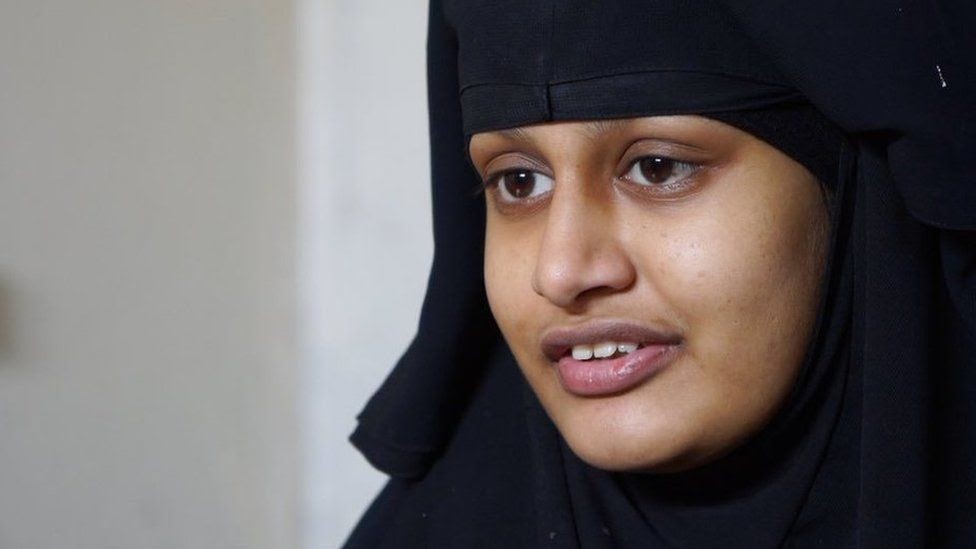

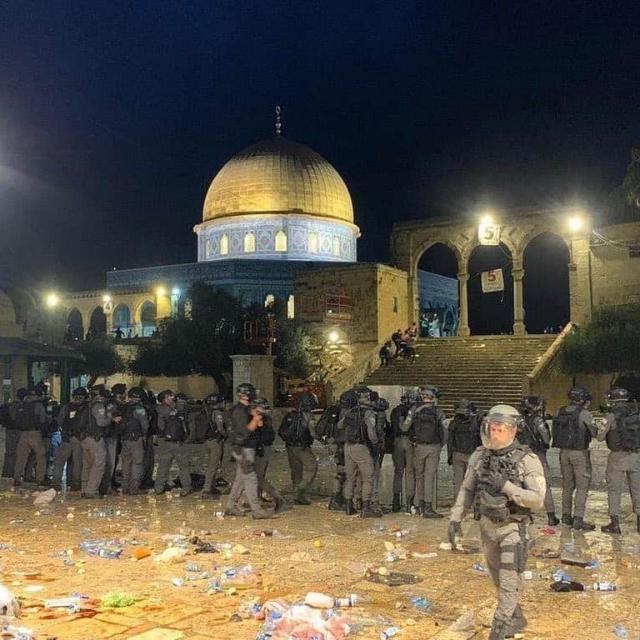
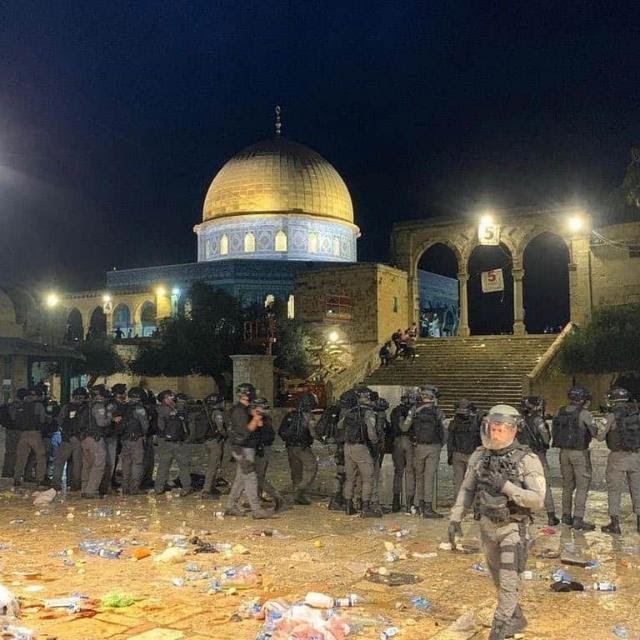


 Abdul’s World